01 / THE DEEP READ
Editorial analysis
An editorial interpretation of the conversation, distinguishing the guest’s arguments from verified business outcomes.
An industry that taught clients to underpay
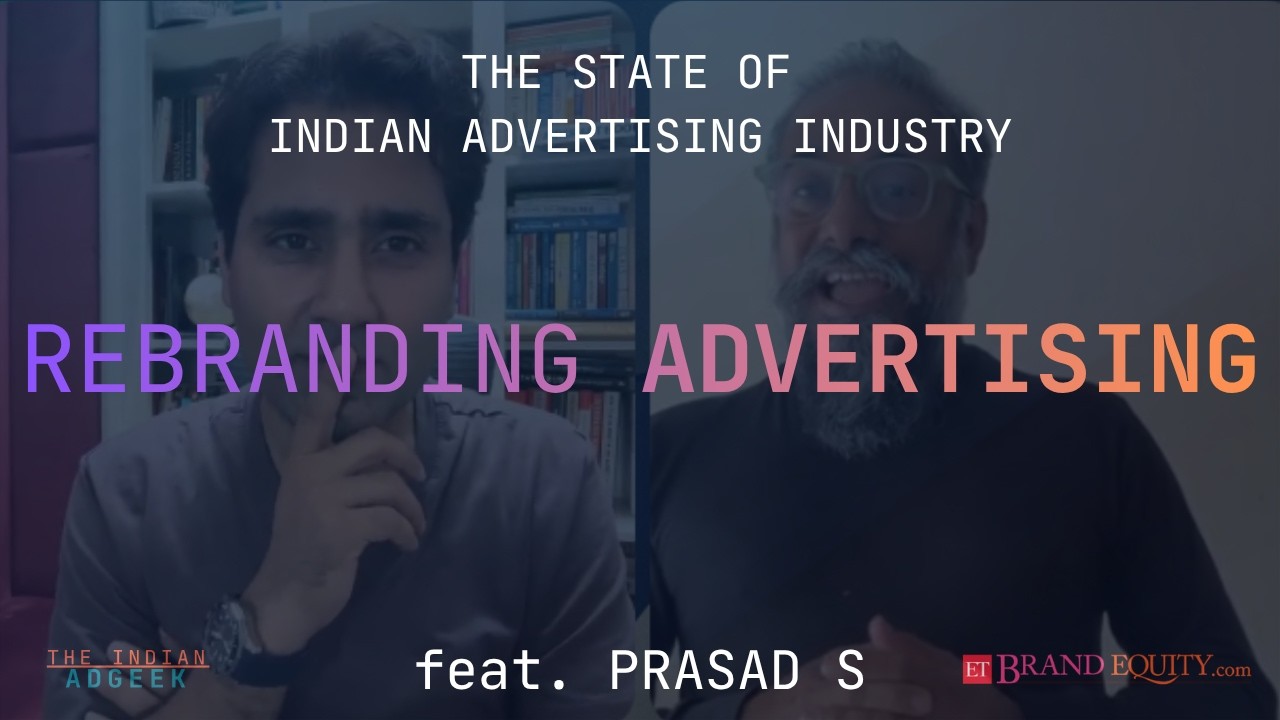
Prasad Sangameshwaran, editor of ETBrandEquity.com, argues that advertising’s pricing problem reflects habits the industry helped create. In conversation with Vishal Mehra, he connects undercutting and weak respect for agency time with procurement-led commercial negotiations and pressure on staff pay. He also places advertising within a wider Indian business mindset of low-cost production. The failure to establish pitch fees, in his account, was not simply a failure of client understanding or media advocacy: agencies undermined the collective position by offering to pitch for free. Mehra adds the example of explaining an agency’s work and pricing directly to procurement.
What follows the agency-of-record model
The discussion asks what might replace a relationship built around an agency of record. Sangameshwaran worries that fragmented project work leaves clients carrying responsibility for the brand and encourages transactional price comparisons. He presents outcome-based pricing as a possible solution, conditional on agencies sustaining the approach rather than undercutting it. Independents, he suggests, can benefit from senior people remaining involved after the pitch and from fewer global reporting pressures, provided they avoid becoming bloated. He later extends the advantage to a nimble mindset inside large networks; Mehra stresses the scale and impact holding companies still provide.
The business conflicts of trade publishing
Trade journalism faces a different tension: serving readers while advertisers fund the business. Sangameshwaran says editorial independence requires repeated personal resistance and argues for content before commerce. He cites past reporting on awards and misconduct as examples of the trade press challenging the industry. Asked about events, he describes separate responsibility for awards and summit curation, while defending events as opportunities for journalistic access. On Cannes, he questions the cost of participation when agency businesses and jobs are under pressure, but also retains a place for learning and growth rather than dismissing the summit.
New formats and the AI distribution shock
Looking ahead, Sangameshwaran sees promise in micro-dramas, including employee participation and employer branding, while warning that weak commitment could turn the format into another passing trend. He describes AI as a threat to website traction and social media as an important distribution channel, with long-form storytelling still open to experimentation. Mehra challenges how widely teams can sustain its quality. The conversation closes by linking agency value to lasting client contributions beyond cosmetic identity changes, and by considering the continuing circulation of online stories alongside print, television and changing reader habits.
An industry that taught clients to underpay.
Why agencies struggle to capture value
An editorial visualisation of the relationships and choices discussed in this episode.
02 / EXPLORE THE ARGUMENT
Questions & answers
How have agencies weakened their own pricing position?
Sangameshwaran argues that agencies helped normalise underpricing and weakened the pitch-fee case by volunteering to work without fees, despite trade-media support for compensation.
Who is trade journalism ultimately meant to serve?
He frames editorial independence around a reader’s needs, while recognising that the advertiser funding content is a different customer from the reader consuming it.
Can industry events coexist with editorial independence?
His defence of industry events rests on separate curation responsibilities and concentrated access to sources; it does not remove the need to protect editorial judgment.
What does a sceptical assessment of Cannes expenditure require?
Cannes spending deserves scrutiny when agencies are cutting jobs, he argues, while learning and growth remain reasons to assess its value rather than abandon it automatically.
Can outcome pricing repair agency economics by itself?
He sees outcome-based pricing as a possible response to transactional project work, with adoption vulnerable to the same undercutting that weakened pitch fees.
03 / TRANSPARENCY
Sources & attribution
Supporting references and reporting notes. Select a reference to visit its source.
Original publisher audio (archived enclosure): Original publisher audio (archived enclosure).
Podcast episode on Spotify: Podcast episode on Spotify.
Podcast video on YouTube: Podcast video on YouTube.
Original publication: The Indian AdGeek, Episode 34, featuring Prasad Sangameshwaran; original publisher date: 2026-09-14.
Method and attribution: This analysis and the five Q&As are editorial syntheses, not verbatim statements or substitutes for listening to the original conversation. Guest judgments, examples, forecasts and reported business metrics should not be confused with independently audited findings. Research timestamps do not represent podcast chapter timings.