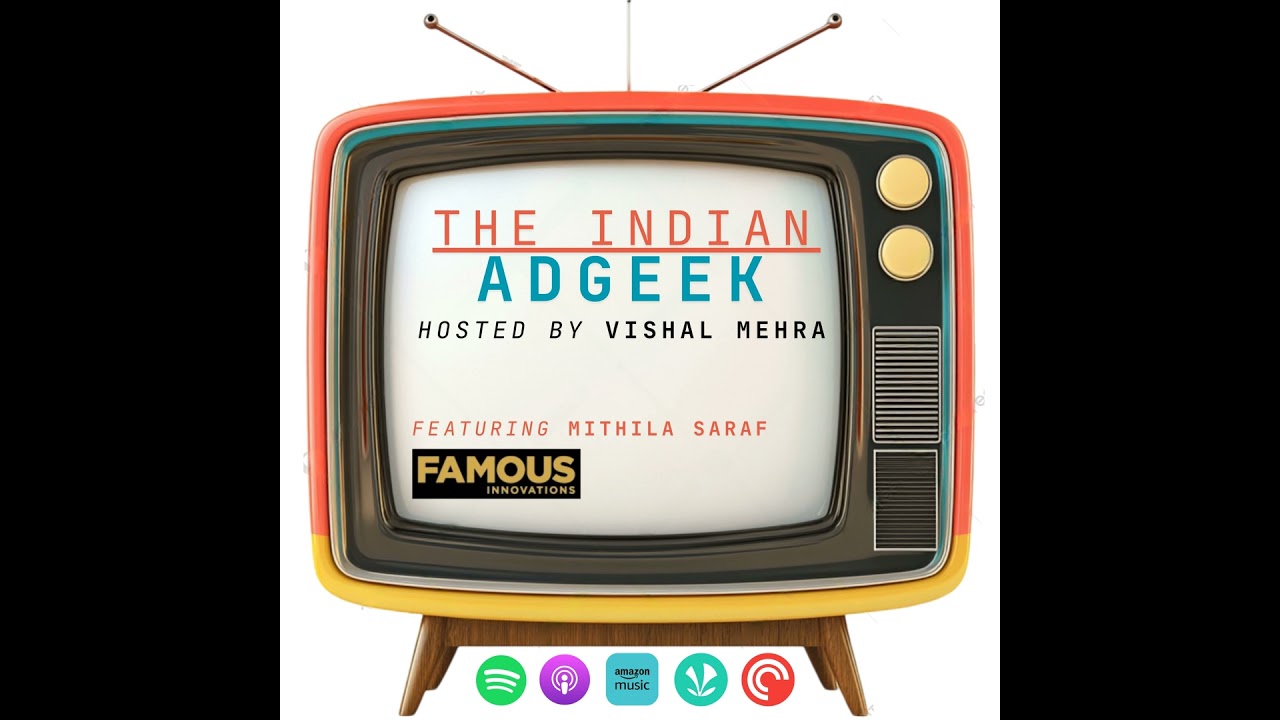
01 / THE DEEP READ
Editorial analysis
An editorial interpretation of the conversation, distinguishing the guest’s arguments from verified business outcomes.
From tiny team to independent business
Mithila Saraf’s account of Famous Innovations begins with a habit that becomes harder to preserve as an agency grows: doing whatever the work needs. Having joined a tiny team, she moved between client management, copy, logistics and the practical business of getting an office running. Her challenge as CEO is to turn that resourcefulness into systems and distributed leadership without replacing it with a company in which responsibility belongs to somebody else.
Keeping leadership close while scaling
Her answer to scale is deliberately personal. Saraf wants leaders close enough to their teams to know the people behind the work. She describes an agency within an agency, with the Bangalore office managing its own clients, leadership and profit and loss. Growing value within a trusted client relationship matters more to her than accumulating accounts. The distinction explains why a larger business need not mean a continuously expanding headcount: more capabilities or more brands within an existing relationship can also provide growth.
Why some pitches deserve a no
That view makes pitching a leadership responsibility rather than a standing invitation to chase activity. Saraf asks whether a prospect can explain its budget, expectations and reasons for changing agency. She also recognises why clients increasingly demand so much upfront: agencies have sometimes failed to deliver on the promise of the pitch. Her response is to set fair boundaries, not to deny the client’s concern. The same concern for alignment shapes her treatment of scope creep. Extra effort can make sense within a reciprocal, long-term partnership; it becomes a different problem when one side consistently takes advantage.
Strategy and digital execution in one offer
The discussion also resists an easy division between brand strategy and digital execution. Saraf describes Famous’s appeal as bringing those capabilities together, and cites the Nilkamal Sleep pitch as a chance to modernise an established name without discarding its legacy. Ideas for quick-commerce platforms sit alongside larger campaign thinking, though she explicitly limits the agency’s role in media-budget planning. Her advice to founders follows the same pattern: invest in the work, the relationship and the early hires who will shape the culture. Scale, in her telling, should follow those choices rather than dictate them.
Growth becomes worthwhile when it expands responsibility without diluting the work.
The independent agency's growth choices
An editorial visualisation of the relationships and choices discussed in this episode.
02 / EXPLORE THE ARGUMENT
Questions & answers
How can an independent agency grow without losing closeness?
Saraf favours independently led units within the agency so leaders can retain personal relationships with teams and clients, rather than treating headcount as the measure of success.
Must agency growth mean winning a larger roster?
Growth can come from doing more valuable work within existing relationships, including additional capabilities or brands, without proportionate headcount growth.
What qualifies a pitch as worth pursuing?
A pitch should clear basic tests of budget, expectations and the reason for an agency change. Saraf sees setting those boundaries as a leadership duty.
When does scope expansion help rather than damage a relationship?
Scope creep is often a symptom of weak alignment. Going beyond a brief can be worthwhile when the relationship is reciprocal, not when it becomes one-sided extraction.
How does Famous combine brand strategy with digital work?
Famous brings strategic brand thinking and digital execution together. Saraf discusses ideas for quick commerce while making clear that most clients’ media planning is outside its role.
03 / TRANSPARENCY
Sources & attribution
Supporting references and reporting notes. Select a reference to visit its source.
Original publisher audio (archived enclosure): Original publisher audio (archived enclosure).
Podcast episode on Spotify: Podcast episode on Spotify.
Podcast video on YouTube: Podcast video on YouTube.
Original publication: The Indian AdGeek, Episode 05, featuring Mithila Saraf; original publisher date: 2025-08-03.
Method and attribution: This analysis and the five Q&As are editorial syntheses, not verbatim statements or substitutes for listening to the original conversation. Guest judgments, examples, forecasts and reported business metrics should not be confused with independently audited findings. Research timestamps do not represent podcast chapter timings.