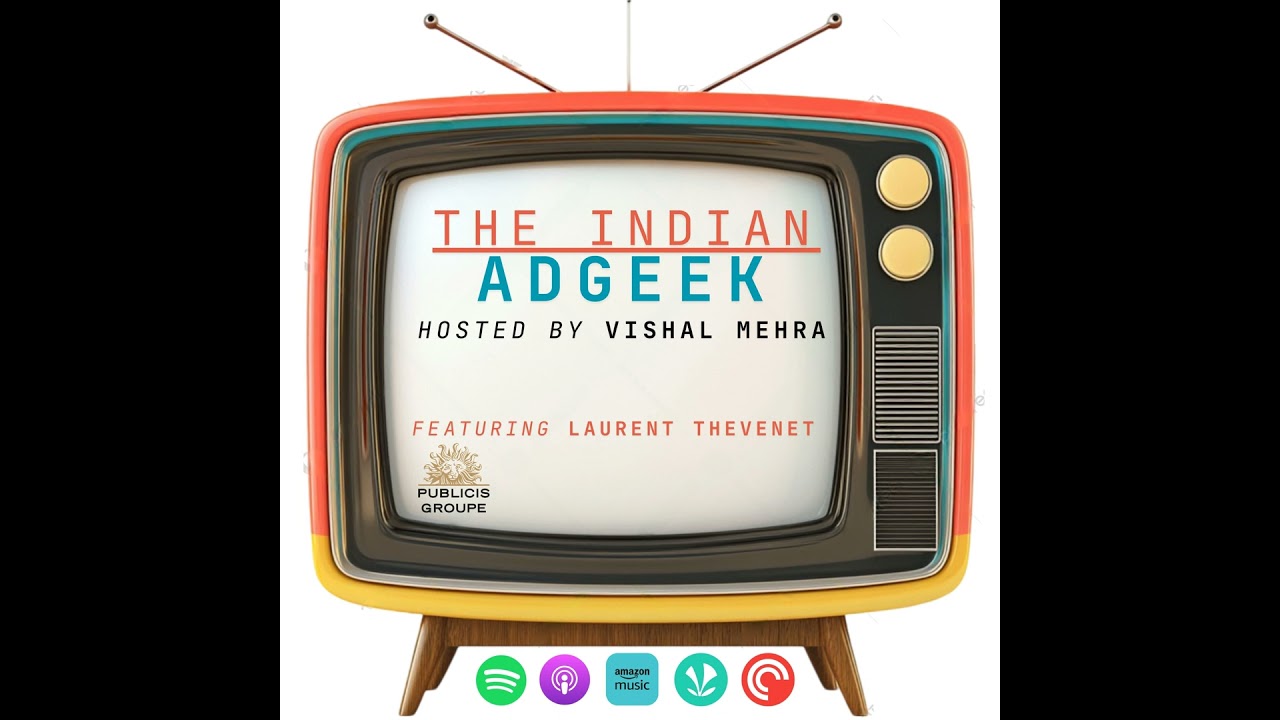
01 / THE DEEP READ
Editorial analysis
An editorial interpretation of the conversation, distinguishing the guest’s arguments from verified business outcomes.
Where AI is changing the brief
Laurent Thevenet describes creative technology as a bridge between engineering and creative practice. His route from software engineering and a Singapore startup into BBDO, R/GA and Publicis Groupe informs a role that spans campaigns, product design, infrastructure and transformation. Rather than place every specialist in one agency, he connects a core group with a wider network across APAC. AI has made that ability to translate between disciplines especially useful: easy access to a tool does not remove the engineering work of deploying and integrating it.
Why tools alone do not create an advantage
In his account, AI currently makes its clearest contribution at the beginning of the creative process, helping planning, strategy and briefing through faster access to information and proprietary data. Production is also changing as teams move more directly from an idea to visualisation. He argues that experienced filmmakers and art directors who adopt the tools still produce stronger work, while people without traditional creative titles can gain a place in the process. Publicis’s advantage, he says, combines enterprise safeguards, exclusive data and distinctive talent, rather than consumer access to the same models alone.
The distributed creative technology organisation
Thevenet points to India’s Apollo eleven unit and work from Singapore as examples of technology becoming part of a creative team’s normal practice. The Tiger Summer Puffer discussion shows a progression from rough internal prototyping to specialist production across countries. He distinguishes Singapore’s Marcel AI engineering hub, which builds supporting tools, from creativity and creative technology that remain distributed across markets. Bringing the right people into briefs early, sharing work internally and connecting makers across agencies are central to his approach. He also describes AI simulation as a way to help clients consider unfamiliar ideas, while acknowledging limits to his own measurement expertise.
Prototype first; bring the specialists later
Hiring, for him, is about people who can bridge different disciplines; a perfect balance of engineering, ideas and craft is rare. Juniors need freedom and mentorship to develop the other side of their practice. Looking ahead, he sees possibilities in connecting physical and digital experiences through AR and mixed reality, but says the useful form factor remains uncertain and must fit natural behaviour. He also urges attention to quantum computing, framing its timing and effect on advertising as uncertain even as he speculates about major computational gains and an acceleration of AI.
Giving everyone the same tool does not give everyone the same creative advantage.
Creative technology beyond the AI licence
An editorial visualisation of the relationships and choices discussed in this episode.
02 / EXPLORE THE ARGUMENT
Questions & answers
Where does Thevenet see AI making the clearest difference today?
Thevenet sees AI’s strongest present impact in strategy and briefing, with production increasingly able to move directly into visualisation.
What matters beyond giving every team the same AI model?
The competitive advantage he describes rests on enterprise safeguards, exclusive data and creative talent, beyond access to widely available AI models.
Can unconventional entrants add to creative teams?
Experienced practitioners can use AI to strengthen their output, while early adopters without conventional creative titles can gain a place in the creative process.
Is all creative technology centralised in Singapore?
Singapore’s AI engineering hub builds supporting tools; Thevenet explicitly says creative technology and creativity remain distributed across markets.
Why are rough prototypes valuable before full production?
Rough prototypes can establish whether an ambitious experience is feasible before specialist makers and designers turn it into a finished product.
03 / TRANSPARENCY
Sources & attribution
Supporting references and reporting notes. Select a reference to visit its source.
Original publisher audio (archived enclosure): Original publisher audio (archived enclosure).
Podcast episode on Spotify: Podcast episode on Spotify.
Podcast video on YouTube: Podcast video on YouTube.
Original publication: The Indian AdGeek, Episode 27, featuring Laurent Thevenet; original publisher date: 2026-06-07.
Method and attribution: This analysis and the five Q&As are editorial syntheses, not verbatim statements or substitutes for listening to the original conversation. Guest judgments, examples, forecasts and reported business metrics should not be confused with independently audited findings. Research timestamps do not represent podcast chapter timings.