01 / THE DEEP READ
Editorial analysis
A forecast made at the end of 2025
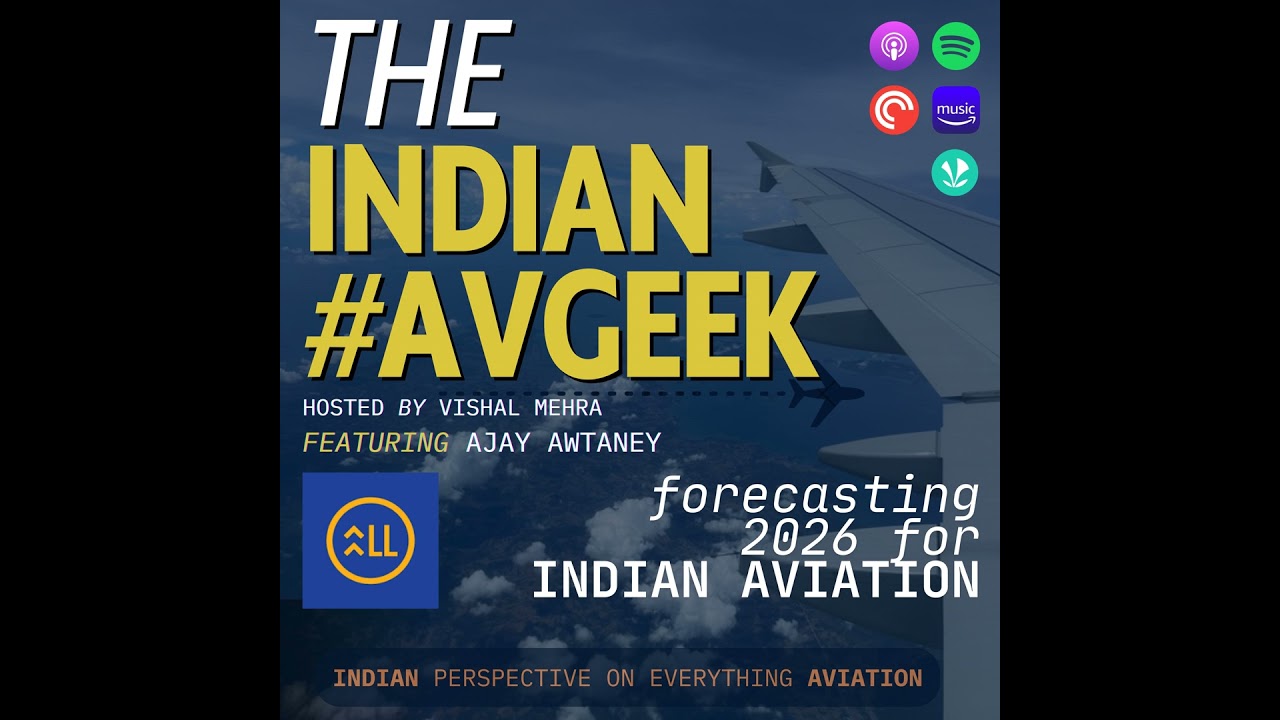
Recorded as 2025 closed, this forecasting conversation is valuable precisely because it is falsifiable. Ajay Awtaney weighs the prospects for two airlines undergoing different kinds of transformation: IndiGo moving into premium cabins and longer flights while defending an extraordinarily dense domestic operation; Air India trying to rebuild service consistency alongside a fragmented fleet, multiple brands and a wider international network. The year-end vantage point matters: forecasts about openings, route launches and commercial products must remain dated expectations rather than retrospectively polished certainties.
Why operating buffers matter
The decisive issue raised by IndiGo’s December 2025 disruption is buffer. Awtaney questions whether a high-utilisation model has enough crews and recovery capacity to cope with new rostering rules and ordinary shocks. His argument is not that efficiency is a mistake; it is that cost savings can become very expensive when operational redundancy disappears. An independent government inquiry subsequently identified inadequate regulatory preparedness, narrow roster buffers and deficient software support among the causes. This is an important distinction: the guest was analysing a crisis while facts and regulatory findings were still evolving.
Premium cabins, long-haul range and execution
Product strategy is more complicated than adding a larger seat. Awtaney separates narrowbody IndiGoStretch from the airline’s leased long-haul cabin and asks whether price, lounges, schedule and airport support create a convincing business proposition. He treats the A321XLR as a route-development tool suited to thinner markets, while recognising that passenger tolerance and fares will decide the commercial ceiling. Air India’s parallel effort is judged not only on hardware refurbishment but on the less visible work of reliable service, staffing and execution.
Two airport catchments and the loyalty test
Two new airport geographies offer a third test. Navi Mumbai and Noida are not interchangeable substitutes for their incumbent hubs; catchments, ground access, airline basing and the timing of international traffic will determine their role. The interview also probes loyalty schemes and card partnerships: attractive frequent-flyer economics have to be earned through relevant partnerships and an airline customers actually choose repeatedly. The useful question for readers is not which project gets the largest headline, but which can improve reliability and choice in a measurable way.
A credible aviation forecast should identify what would prove it wrong.
Four questions behind the 2026 aviation forecast
An editorial visualisation of the relationships and choices discussed in this episode.
02 / EXPLORE THE ARGUMENT
Questions & answers
What lesson did the December IndiGo crisis expose?
Awtaney raises inadequate operating slack and the financial cost of disruption; the government later set out a more detailed regulatory account.
Has IndiGo become a full-service premium carrier?
He argues that a wider seat is not sufficient: ground services, consistent benefits and cabin configuration matter by sector.
What determines whether Navi Mumbai succeeds?
Its own catchment and the ability to attract sustainable airline bases and passenger flows, not a simple reallocation from Mumbai’s existing airport.
How quickly can loyalty transform a market?
Awtaney sees credit-card and partner economics as different stages of maturity for the new Indian programmes.
What would validate his XLR optimism?
Reliable operations, sustained load/yield and repeat premium demand on specific routes—not mere technical range.
03 / TRANSPARENCY
Sources & attribution
Supporting references and reporting notes. Select a reference to visit its source.
Original interview: The Indian AvGeek — Episode 57. Published 28 December 2025.
Editorial context: This is a researched interpretation of the original conversation, not a verbatim transcript. Guests’ statements, forecasts and business or policy assessments are presented in their original 2025 context; they should not be treated as independently verified current conditions.
Editorial Q&A: Questions and answers are explanatory paraphrases, not quotations from the speakers.
Forecast note: This discussion was recorded at the end of 2025. The opinions, event interpretations and airport/airline forecasts are not retrospective 2026 outcomes.