01 / THE DEEP READ
Editorial analysis
The allocation discipline behind every new route
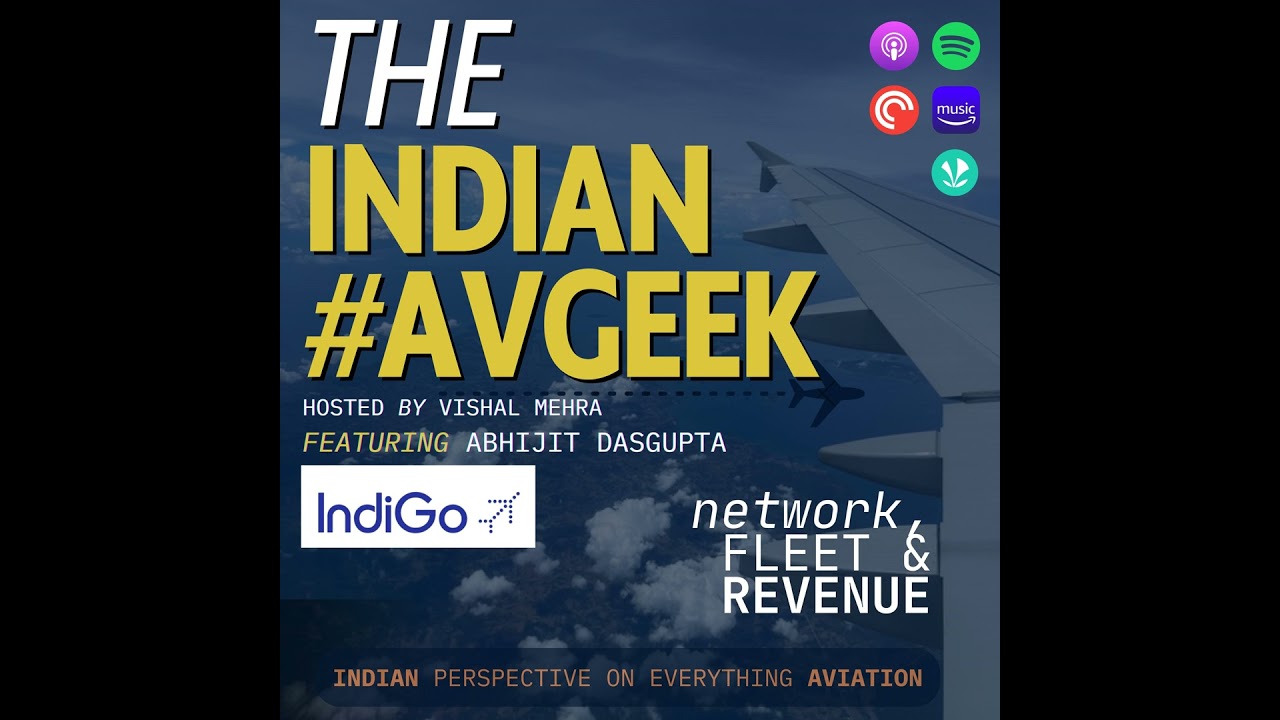
The most revealing part of this IndiGo interview is not the 2025 route pipeline. It is the process by which a network planner turns imperfect market observations into an executable schedule. Abhijit DasGupta outlines a continuing loop: collect ideas from research, sales teams, airports and tourism agencies; subject them to demand and economics models; optimise them against aircraft availability, slots and airport constraints; distribute the schedule; and compare actual performance with the forecast. What looks publicly like a new route announcement is the end of a much more iterative allocation exercise.
Connections, slots and operational constraints
That distinction becomes critical when evaluating hub strategy. DasGupta says roughly one-quarter to 30% of IndiGo’s traffic was connecting at the time, with a larger share on international sectors. He explicitly declines more detailed disclosure and rejects any universal connecting-traffic minimum. A successful route could be predominantly point-to-point or rely heavily on feed, depending on the local market, season, costs and geographic network. New airport capacity at Noida and Navi Mumbai offers both fresh local catchment and a chance to redirect connecting flows; the airports are not merely additional terminals.
Why the fleet and network must evolve together
Fleet evolution and the long-haul ambition then follow from commercial arithmetic. Aircraft types are evaluated jointly by planning and technical specialists. DasGupta emphasises that high aircraft turnover also demands secondary-market remarketability, limiting how customised an aircraft can sensibly be. IndiGo’s then-current ACMI aircraft served as stopgap capacity and a rehearsal for international selling, seasonality and more complex revenue management before permanent A350 capacity arrived. The relationship between fares, short booking windows and a highly stimulable market suggests why traditional revenue forecasts are not sufficient: new routes can themselves change the underlying demand.
The route-development process does not end at launch: actual performance must test the forecast.
Inside the airline route-planning feedback loop
An editorial visualisation of the relationships and choices discussed in this episode.
02 / EXPLORE THE ARGUMENT
Questions & answers
How does route selection work?
Collect ideas, assess their economics, optimise capacity and slots, launch and feed results into the next round.
What information passes between an airline and airports?
Airports offer local intelligence, while airlines see transfer flows and aircraft opportunities unavailable to the airport alone.
How important is connecting traffic?
It is material overall but highly variable by route; he gives an aggregate estimate while withholding granular breakdowns.
How are fleet choices made?
Commercial and technical teams jointly balance opportunity, aircraft performance and resale/lease flexibility.
What did ACMI aircraft contribute?
Faster capacity and gradual long-haul organisational capability building.
03 / TRANSPARENCY
Sources & attribution
Supporting references and reporting notes. Select a reference to visit its source.
Original conversation: The Indian AvGeek — Episode 40. Originally published 18 May 2025.
Historical context: This analysis reflects statements and assessments made during the original 2025 conversation. Strategies, forecasts, regulations, commercial claims and figures should be read in that period rather than as an independently verified account of October 2026.
Editorial Q&A: These are sourced explanatory paraphrases, not verbatim quotations from the guest.
Interpretation note: Forward-looking statements and market comparisons are attributed to the speakers’ contemporary arguments rather than asserted as established outcomes.