Skip to content
THE INDIAN GEEKAVIATION CONNECTS THE WORLD / ADVERTISING SHAPES HOW WE SEE ITEXPLORE THE INDIAN AVGEEK ↗
THE INDIAN AVGEEK EPISODE 034EDITORIAL KNOWLEDGE EDITION
AVIATION / THE BUSINESS OF FLIGHT

The mechanics of aircraft leasing and asset management in India

Acumen Aviation’s Alok Anand walks through leasing structures, India’s developing lessor market and the role of GIFT City in airline transactions.

WITH ALOK ANAND 06 APR 2025 38 MIN

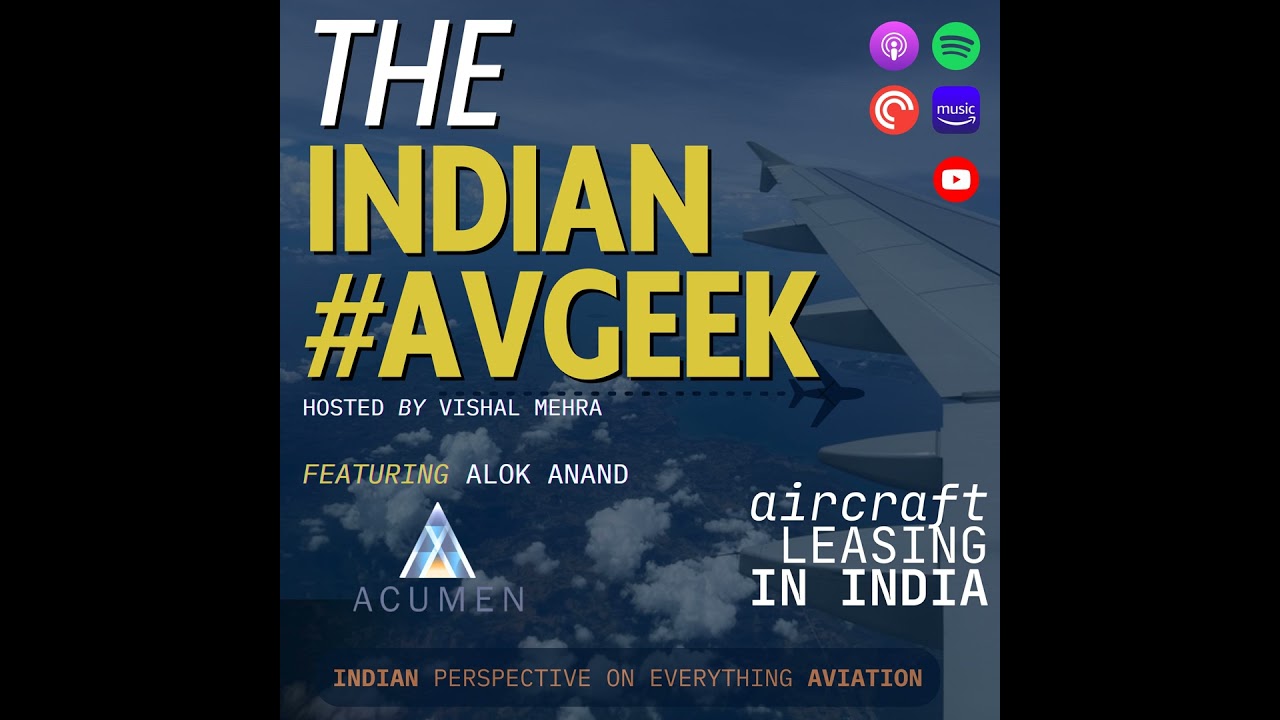
The mechanics of aircraft leasing and asset management in India episode artwork
THE INDIAN AVGEEK034 / VIDEO PODCAST
PLAY THE AUDIO HEREEpisode 34 · Full conversationAudio plays directly on The Indian Geek.
35
RELATED CONVERSATION / FROM THE ARCHIVE
Aircraft Leasing & Asset Management — Part 2Alok Anand · Sale-and-leaseback, airline credit and aircraft ownership economics
READ EPISODE 35 ↗
THE CENTRAL QUESTION / WHAT YOU NEED TO KNOW
01 / THE QUESTION

What does an aircraft lessor own, manage and protect over the life of a lease?

02 / THE CONVERSATION IN BRIEF

Alok Anand describes aircraft leasing as a technical and financial asset-management business, with documentation, maintenance, delivery and redelivery as central responsibilities.

03 / THE EDITORIAL LENS

The legal form of a lease, the operator's duties and the lessor's residual asset exposure are distinct. GIFT City tax incentives alone cannot establish domestic risk-bearing capacity.

01 / THE DEEP READ

Editorial analysis

Leasing is a system, not a simple rental


Aircraft leasing is not principally about owning an aeroplane. Alok Anand describes an asset-management business that protects the lender or lessor through valuation, maintenance and engine-contract review, documentation checks, delivery and return conditions, and continuous monitoring across a lease cycle. His practical example involves a bank considering a mixed aircraft portfolio: technical diligence can uncover defects or contractual gaps that change the deal price even when aircraft supply favours sellers. The operational point is that a viable aircraft asset must remain legal, documented, maintained, serviceable and remarketable.


India’s legal and financing architecture


The interview then separates wet leasing from dry and finance leasing, a distinction often blurred in public aviation discussion. Wet leasing typically includes aircraft, crew and specified operational services from the providing carrier; a dry lease is primarily an aircraft transaction with operating responsibility placed elsewhere. Finance leasing is often secured credit supported by a borrower’s balance sheet. Anand says many Indian GIFT City structures described as aircraft leasing had been finance-lease or pass-through entities, rather than domestic platforms taking real residual-value and remarketing risk across a global portfolio.


The risk that remains after aircraft delivery


His critique of GIFT City’s development is deliberately uncomfortable. Tax preferences and an international-financial-services label are insufficient if SPVs take too long to form, if each “single window” still masks serial approvals, and if uncertain tax treatment extends beyond a limited exemption period. Anand wants faster entity formation, trust-based supervision, predictable tax rules and a competitive environment for genuinely Indian leasing businesses. His timings, compliance burden and policy comparisons represent his experience and assessment, not audited metrics for the entire jurisdiction.

EDITORIAL THESIS

The lease is a long chain of technical, legal and financial obligations—not simply aircraft rent.

EXPLAINING THE ARGUMENTEDITORIAL / 01

An aircraft lease is a lifecycle of risk

An editorial visualisation of the relationships and choices discussed in this episode.

01Underwrite the assetValue, records, engines, maintenance and credit review
02Structure the contractDry, wet and finance arrangements allocate different duties
03Monitor operationMaintenance status, reserves, insurance and operator performance
04Return or remarketRedelivery conditions and asset condition determine residual value
Editorial lifecycle derived from Episode 34. Wet leasing also supplies operational services; not every arrangement shares the same transfer of risk.

02 / EXPLORE THE ARGUMENT

Questions & answers

What does Acumen Aviation do?


End-to-end aircraft asset management and valuation for lessors, banks and investors.


What happens during an aircraft purchase?


Commercial and technical diligence inform contracts, engine agreements, inspections and ongoing monitoring.


How do wet and dry leases differ?


A wet lease supplies an operating aircraft and crew, whereas the lessee’s role and control differ in a dry lease.


What would treating aviation as infrastructure change?


He expects more accessible capital and stronger policy support, while acknowledging high industry capital costs.


Do current GIFT transactions represent a real lessor industry?


He says many are pass-through or finance-lease arrangements and do not establish deep local operating-lessor capacity.

03 / TRANSPARENCY

Sources & attribution

Supporting references and reporting notes. Select a reference to visit its source.

Original conversation: The Indian AvGeek — Episode 34. Originally published 06 April 2025.


Historical context: This analysis reflects statements and assessments made during the original 2025 conversation. Strategies, forecasts, regulations, commercial claims and figures should be read in that period rather than as an independently verified account of October 2026.


Editorial Q&A: These are sourced explanatory paraphrases, not verbatim quotations from the guest.

THE INDIAN AVGEEK / EDITORIAL EDITION 034EXPLORE MORE BRIEFINGS ↗
THE INDIAN GEEKAVIATION CONNECTS THE WORLD. ADVERTISING SHAPES HOW WE SEE IT.

AVGEEK

The mechanics of aircraft leasing and asset management in India

Acumen Aviation’s Alok Anand walks through leasing structures, India’s developing lessor market and the role of GIFT City in airline transactions.

The conversation

Just as the Indian Parliament approved a bill to empower Cape Town convention and aircraft protocol, Alok Anand joined us to give an in-depth perspective of the Indian aircraft leasing market, how the entire process works, wet and dry leasing, as well as leasing done via GIFT City by Indian airlines so far and if it is any good?

Alok Anand - @AlokAnand77 Vishal Mehra - @vishal1mehra

Key Takeaways

  1. Aircraft asset management spans the lease cycle. Alok Anand described valuation, records, engine support agreements, technical inspection, delivery and return conditions as connected disciplines rather than a single act of finding an aircraft.
  2. A seller-favourable aircraft market does not remove the need for diligence. Defects, missing records or contractual risks can change a buyer’s valuation and negotiating position; a general market label is not a substitute for assessing the asset.
  3. Wet leasing, dry leasing and finance leasing must not be used interchangeably. The discussion distinguishes an operating carrier supplying aircraft and crew from aircraft-only leasing, while finance-lease structures bring different financing and ownership-related responsibilities.
  4. The conversation was framed by Indian legislation intended to give effect to the Cape Town Convention and Aircraft Protocol. Anand treated creditor protection and repossession as important, but argued that better recovery rules alone would not create a domestic operating-lessor industry.
  5. Anand questioned how much domestic capability GIFT City structures create when aircraft pass through finance-lease entities without substantial local residual-value exposure or asset-management work. That is a critique of commercial substance, not a claim that every finance lease lacks value.
  6. Competing with established leasing centres needs workable institutions as well as a location. Anand emphasised faster SPV formation, predictable taxation and integrated approvals when assessing the practical usefulness of Indian leasing arrangements.
  7. The compliance burden and relative cost of Indian structures were Anand’s experience-based assessments in the April 2025 episode. They should not be presented as audited industry-wide measurements or as a legal assessment of the framework operating today.

Editorial analysis

Leasing is a system, not a simple rental


Aircraft leasing is not principally about owning an aeroplane. Alok Anand describes an asset-management business that protects the lender or lessor through valuation, maintenance and engine-contract review, documentation checks, delivery and return conditions, and continuous monitoring across a lease cycle. His practical example involves a bank considering a mixed aircraft portfolio: technical diligence can uncover defects or contractual gaps that change the deal price even when aircraft supply favours sellers. The operational point is that a viable aircraft asset must remain legal, documented, maintained, serviceable and remarketable.


India’s legal and financing architecture


The interview then separates wet leasing from dry and finance leasing, a distinction often blurred in public aviation discussion. Wet leasing typically includes aircraft, crew and specified operational services from the providing carrier; a dry lease is primarily an aircraft transaction with operating responsibility placed elsewhere. Finance leasing is often secured credit supported by a borrower’s balance sheet. Anand says many Indian GIFT City structures described as aircraft leasing had been finance-lease or pass-through entities, rather than domestic platforms taking real residual-value and remarketing risk across a global portfolio.


The risk that remains after aircraft delivery


His critique of GIFT City’s development is deliberately uncomfortable. Tax preferences and an international-financial-services label are insufficient if SPVs take too long to form, if each “single window” still masks serial approvals, and if uncertain tax treatment extends beyond a limited exemption period. Anand wants faster entity formation, trust-based supervision, predictable tax rules and a competitive environment for genuinely Indian leasing businesses. His timings, compliance burden and policy comparisons represent his experience and assessment, not audited metrics for the entire jurisdiction.

Questions & answers

What does Acumen Aviation do?


End-to-end aircraft asset management and valuation for lessors, banks and investors.


What happens during an aircraft purchase?


Commercial and technical diligence inform contracts, engine agreements, inspections and ongoing monitoring.


How do wet and dry leases differ?


A wet lease supplies an operating aircraft and crew, whereas the lessee’s role and control differ in a dry lease.


What would treating aviation as infrastructure change?


He expects more accessible capital and stronger policy support, while acknowledging high industry capital costs.


Do current GIFT transactions represent a real lessor industry?


He says many are pass-through or finance-lease arrangements and do not establish deep local operating-lessor capacity.

Sources & attribution

Original conversation: The Indian AvGeek — Episode 34. Originally published 06 April 2025.


Historical context: This analysis reflects statements and assessments made during the original 2025 conversation. Strategies, forecasts, regulations, commercial claims and figures should be read in that period rather than as an independently verified account of October 2026.


Editorial Q&A: These are sourced explanatory paraphrases, not verbatim quotations from the guest.

THE INDIAN GEEK

Aviation connects the world.
Advertising shapes how we see it.