Skip to content
THE INDIAN GEEKAVIATION CONNECTS THE WORLD / ADVERTISING SHAPES HOW WE SEE ITEXPLORE THE INDIAN AVGEEK ↗
THE INDIAN AVGEEK EPISODE 063EDITORIAL KNOWLEDGE EDITION
AVIATION / THE BUSINESS OF FLIGHT

IndiGo’s leadership change and the questions for its strategy

Kushan Mitra and Ajay Awtaney discuss Pieter Elbers’ departure and what it could mean for IndiGo’s widebody plans, premium product and balance between expansion and its low-cost roots.

WITH AJAY AWTANEY & KUSHAN MITRA 12 MAR 2026 37 MIN

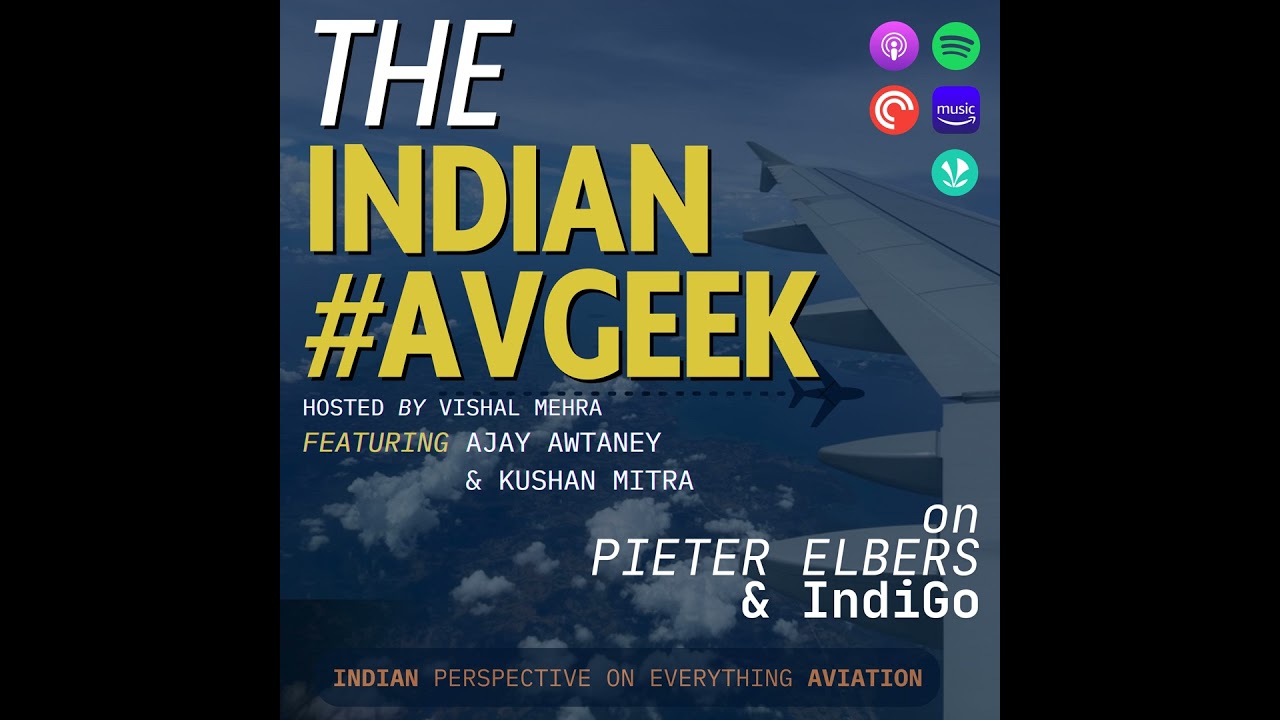
IndiGo’s leadership change and the questions for its strategy episode artwork
THE INDIAN AVGEEK063 / VIDEO PODCAST
PLAY THE AUDIO HEREEpisode 63 · Full conversationAudio plays directly on The Indian Geek.
THE CENTRAL QUESTION / WHAT YOU NEED TO KNOW
01 / THE QUESTION

What can—and cannot—be concluded from Pieter Elbers' departure from IndiGo?

02 / THE CONVERSATION IN BRIEF

The airline announced his departure on 10 March 2026 and Rahul Bhatia's interim role; the roundtable explores operational and strategic implications.

03 / THE EDITORIAL LENS

Regulatory findings and a leadership change are established events, but neither alone proves a particular personal motive or private board decision.

01 / THE DEEP READ

Editorial analysis

What is known about the CEO transition


A surprise CEO departure can create more confident explanations than verified information. This unscheduled roundtable follows IndiGo’s 10 March 2026 announcement that Pieter Elbers would step down with immediate effect and that founder Rahul Bhatia would take interim charge. The participants understandably connect the decision to the severe December 2025 network disruption. But the public announcement did not establish a detailed causal account of the resignation. The interview explores plausible interpretations, including a promoter-led reset, without access to board minutes, personnel records or a statement demonstrating who decided what and when.


Failures of operations are not proof of motive


The distinction is not academic. The December episode became a national operational and consumer crisis. A government inquiry later recorded weak planning buffers, regulatory implementation failures and shortcomings in systems and control. That supports an assessment of operational management problems, not an independently proven theory of why an individual executive resigned three months later. Strong reporting must hold two ideas together: a regulator found failures in the company’s operations, and the full personal/governance decision-making behind Elbers’s exit is not documented here.


Which strategic decisions survive the CEO


The more durable analysis concerns strategy continuity. The guests dispute whether the airline can or should reverse premium seating, international growth and fleet commitments initiated or advanced under Elbers. Aircraft orders, slots, commercial partnerships and accumulated network investment outlive executive tenures. They also consider a structural advantage: a strong domestic network and aircraft supply in a market where competitors cannot add capacity instantly. None of that guarantees successful widebody expansion, or excuses December’s disruption. It does explain why a leadership change may alter tempo without erasing strategic commitments.


A governance story requiring evidence


This programme has an unusual ethical burden. The participants offer candid opinions on motives and the role of government pressure, sometimes explicitly acknowledging that they cannot verify them. Those statements must remain attributed and clearly identified as hypotheses, never promoted into a headline posing as a documented finding. The better story is about governance under stress: what the board knew, how operational risk was escalated, whether accountability changed, and what evidence would show that reliability is improving.

EDITORIAL THESIS

A documented operational failure is not proof of the motive behind an executive's departure.

EXPLAINING THE ARGUMENTEDITORIAL / 01

Evidence versus interpretation in the IndiGo leadership story

An editorial visualisation of the relationships and choices discussed in this episode.

01Documented transition10 March 2026 announcement and interim management role
02Operational recordThe December 2025 disruption and subsequent scrutiny
03Open governance questionsBoard deliberations and private motivations are not established here
04Continuing strategyFleet plans, product evolution and service recovery outlast a CEO
Editorial evidence framework based on Episode 63 and IndiGo's 10 March 2026 statement. A relationship in time is not proof of causation.

02 / EXPLORE THE ARGUMENT

Questions & answers

What is the documented event?


IndiGo said Elbers was stepping down immediately and Bhatia would manage the airline in the interim.


Did the podcast prove government intervention caused his exit?


No. The participants discuss that possibility, and at least one explicitly acknowledges the evidence is unavailable.


How much of the long-haul strategy depends on Elbers?


The analysts argue that aircraft commitments and network execution largely survive one leader, although priorities and speed could change.


Why is this more than a personality story?


The December disruption exposed system-level questions about rostering, operational control and risk governance.


What should a follow-up report investigate?


Board and exchange disclosures, DGCA actions, actual aircraft inductions and independently verified service recovery metrics.

03 / TRANSPARENCY

Sources & attribution

Supporting references and reporting notes. Select a reference to visit its source.

Original interview: The Indian AvGeek — Episode 63. Published 12 March 2026.


Editorial context: This is a researched interpretation of the original conversation, not a verbatim transcript. Guests’ statements, forecasts and business or policy assessments are presented in their original 2026 context; they should not be treated as independently verified current conditions.


Editorial Q&A: Questions and answers are explanatory paraphrases, not quotations from the speakers.


Governance and attribution note: The roundtable discusses a confirmed executive departure and attributed speculation about motives. It does not establish a proven causal explanation for the resignation or allege personal culpability as fact; independently verify corporate/regulatory records before public publication.

THE INDIAN AVGEEK / EDITORIAL EDITION 063EXPLORE MORE BRIEFINGS ↗
THE INDIAN GEEKAVIATION CONNECTS THE WORLD. ADVERTISING SHAPES HOW WE SEE IT.

AVGEEK

IndiGo’s leadership change and the questions for its strategy

Kushan Mitra and Ajay Awtaney discuss Pieter Elbers’ departure and what it could mean for IndiGo’s widebody plans, premium product and balance between expansion and its low-cost roots.

The conversation

Episode 63

On March 10th, 2026, the Indian aviation industry was rocked by the abrupt resignation of Pieter Elbers from IndiGo. As the architect of IndiGo’s global expansion—introducing wide-bodies, business class, and a massive international footprint—his departure leaves more questions than answers.

Is this a strategic pivot back to the airline’s ruthless LCC roots? Does Rahul Bhatia’s "Main Hoon Naa" sign-off signal a cultural restoration or a leadership vacuum?

In this special one-off episode of The Indian AvGeek, we are joined by Kushan Mitra (Publisher, The Pioneer) and Ajay Awtaney (Founder, LiveFromALounge) to dissect the fallout.

We discussed:

* The surgical nature of the resignation and what it says about IndiGo's board dynamics. * Whether the A350 wide-body strategy and IndiGo Stretch are now at risk. * The significance of the “December scars” mentioned in the internal memo. * Where Pieter Elbers might land next—and if Air India is already watching. * Who might be the next top executive at 6E * What the OEMs, like Airbus must be feeling right now

Kushan Mitra on X

Ajay Awtaney on X

Key Takeaways

  1. IndiGo officially announced Elbers’s immediate departure on 10 March 2026; the underlying private decision process is not established here.
  2. The regulatory findings on the December meltdown cannot, on their own, prove the cause or timing of the CEO’s departure.
  3. Commentary about government pressure or personal motives remains speculation unless supported by documentary evidence.
  4. Premium cabins, international routes and fleet commitments create strategic continuity across CEOs.
  5. An extensive domestic network and aircraft commitments can remain competitive advantages despite reputational damage.
  6. Promoter involvement and formal management accountability are distinct governance questions.
  7. The real post-crisis test is operating-buffer restoration, regulatory compliance and customer reliability—not a change of title alone.

Editorial analysis

What is known about the CEO transition


A surprise CEO departure can create more confident explanations than verified information. This unscheduled roundtable follows IndiGo’s 10 March 2026 announcement that Pieter Elbers would step down with immediate effect and that founder Rahul Bhatia would take interim charge. The participants understandably connect the decision to the severe December 2025 network disruption. But the public announcement did not establish a detailed causal account of the resignation. The interview explores plausible interpretations, including a promoter-led reset, without access to board minutes, personnel records or a statement demonstrating who decided what and when.


Failures of operations are not proof of motive


The distinction is not academic. The December episode became a national operational and consumer crisis. A government inquiry later recorded weak planning buffers, regulatory implementation failures and shortcomings in systems and control. That supports an assessment of operational management problems, not an independently proven theory of why an individual executive resigned three months later. Strong reporting must hold two ideas together: a regulator found failures in the company’s operations, and the full personal/governance decision-making behind Elbers’s exit is not documented here.


Which strategic decisions survive the CEO


The more durable analysis concerns strategy continuity. The guests dispute whether the airline can or should reverse premium seating, international growth and fleet commitments initiated or advanced under Elbers. Aircraft orders, slots, commercial partnerships and accumulated network investment outlive executive tenures. They also consider a structural advantage: a strong domestic network and aircraft supply in a market where competitors cannot add capacity instantly. None of that guarantees successful widebody expansion, or excuses December’s disruption. It does explain why a leadership change may alter tempo without erasing strategic commitments.


A governance story requiring evidence


This programme has an unusual ethical burden. The participants offer candid opinions on motives and the role of government pressure, sometimes explicitly acknowledging that they cannot verify them. Those statements must remain attributed and clearly identified as hypotheses, never promoted into a headline posing as a documented finding. The better story is about governance under stress: what the board knew, how operational risk was escalated, whether accountability changed, and what evidence would show that reliability is improving.

Questions & answers

What is the documented event?


IndiGo said Elbers was stepping down immediately and Bhatia would manage the airline in the interim.


Did the podcast prove government intervention caused his exit?


No. The participants discuss that possibility, and at least one explicitly acknowledges the evidence is unavailable.


How much of the long-haul strategy depends on Elbers?


The analysts argue that aircraft commitments and network execution largely survive one leader, although priorities and speed could change.


Why is this more than a personality story?


The December disruption exposed system-level questions about rostering, operational control and risk governance.


What should a follow-up report investigate?


Board and exchange disclosures, DGCA actions, actual aircraft inductions and independently verified service recovery metrics.

Sources & attribution

Original interview: The Indian AvGeek — Episode 63. Published 12 March 2026.


Editorial context: This is a researched interpretation of the original conversation, not a verbatim transcript. Guests’ statements, forecasts and business or policy assessments are presented in their original 2026 context; they should not be treated as independently verified current conditions.


Editorial Q&A: Questions and answers are explanatory paraphrases, not quotations from the speakers.


Governance and attribution note: The roundtable discusses a confirmed executive departure and attributed speculation about motives. It does not establish a proven causal explanation for the resignation or allege personal culpability as fact; independently verify corporate/regulatory records before public publication.

THE INDIAN GEEK

Aviation connects the world.
Advertising shapes how we see it.