01 / THE DEEP READ
Editorial analysis
Brand personality, conventional route economics
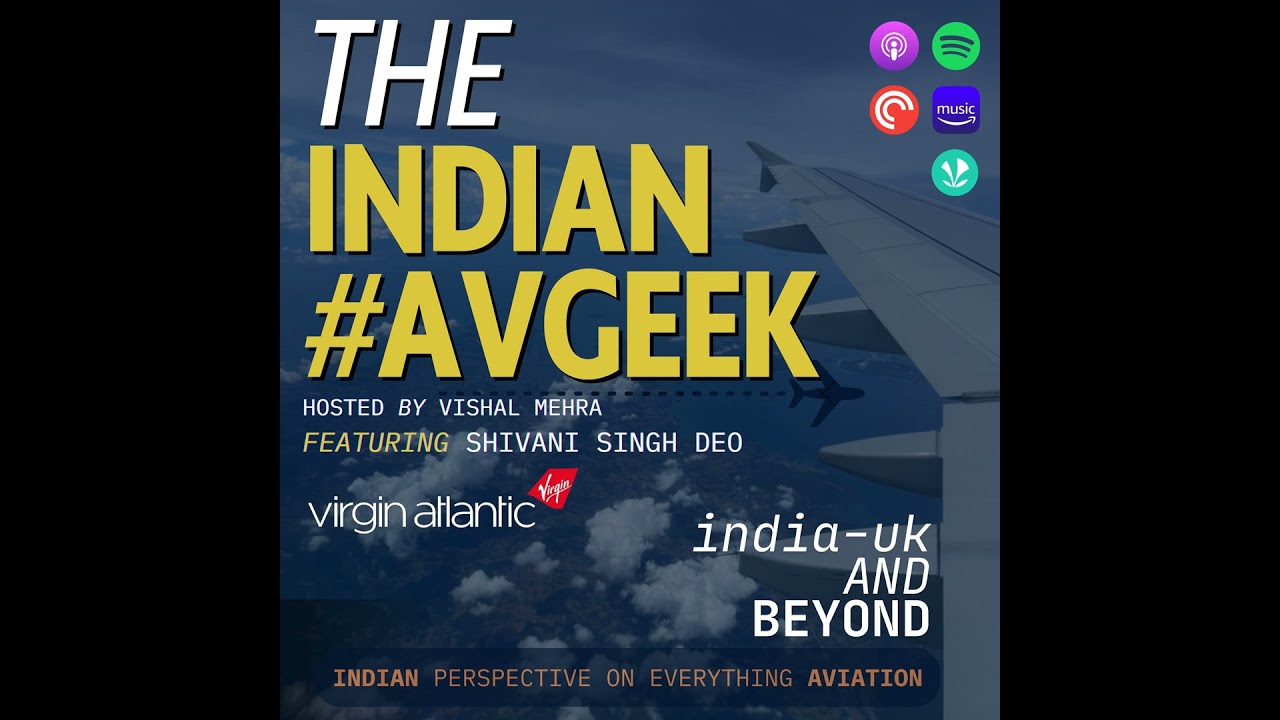
Virgin Atlantic’s exuberant image is not a substitute for commercial strategy. Shivani Singh Deo explains a distinctly conventional airline problem underneath the unconventional brand: how to profit from Indian origin-and-destination traffic while using Heathrow and partners to reach a much larger network. The carrier’s India operation had grown from its pre-pandemic position to five daily services across Delhi, Mumbai and Bengaluru. The guest cites roughly a million annual two-way seats and 350% capacity growth against 2019; those are the company’s period-specific capacity figures, not a statement of revenue or profit growth.
The hub timetable shapes demand
The interview is most revealing where it becomes granular about timing. Singh Deo describes the composition of a daytime Delhi–London flight differently from an overnight service timed for onward transatlantic departures. This is the real meaning of a hub-based product: the same city pair can have different economics depending on the connection bank it meets. She discusses VFR, students, corporate travel and leisure as overlapping customer segments, not rigid cabin-level categories. Aircraft assignment therefore turns on revenue quality, cargo, seasonality and connection opportunity as well as the number of seats.
Codeshares are not joint ventures
Partnership is the second lever, but it requires accurate terminology. Virgin’s IndiGo relationship is a codeshare; its deeper joint commercial relationships with Delta, Air France and KLM are not interchangeable with that agreement. The guest presents partner networks as the way to make India’s secondary cities commercially accessible. Yet a ticket marketed as a single journey does not mean identical terminal handling or baggage procedures everywhere. The competitive test is whether the promised end-to-end experience survives the connection, not how many logos appear in a partnership announcement.
Localisation must survive the journey
Finally, the company’s India localisation programme—language-capable cabin crew, Indian food, entertainment and baggage propositions—offers a better test of “premium” than an advertising slogan. The guest also discusses trade incentives and loyalty in the distribution chain. An authoritative account should resist equating high load factors or greater seat capacity with profitable growth: neither reveals yield, cargo contribution, unit costs or returns on deployed aircraft.
An airline can sell one journey without operating every leg of it.
Four distinct pieces of Virgin Atlantic's India offer
An editorial visualisation of the relationships and choices discussed in this episode.
02 / EXPLORE THE ARGUMENT
Questions & answers
Why has India become more prominent in the network?
The guest points to additional Bengaluru and Mumbai frequencies, Indian domestic feed and Heathrow/US connecting opportunities.
Is IndiGo a joint-venture airline for Virgin Atlantic?
No. The interview discusses a codeshare with IndiGo alongside separate joint-venture partnerships with Delta, Air France and KLM.
Why does flight departure time change the traffic mix?
An overnight Indian departure is better placed for onward transatlantic flights from Heathrow than some daytime arrivals, according to Singh Deo.
Is Virgin Atlantic predominantly a leisure airline?
The guest rejects the binary: the relevant demand varies by route, with premium leisure and corporate passengers served within the same network.
What would establish commercial success?
One would need route yields, seasonally adjusted load factor, cargo contribution, cost and partner-revenue information; the interview provides only selected operating indicators.
03 / TRANSPARENCY
Sources & attribution
Supporting references and reporting notes. Select a reference to visit its source.
Original interview: The Indian AvGeek — Episode 56. Published 14 December 2025.
Editorial context: This is a researched interpretation of the original conversation, not a verbatim transcript. Guests’ statements, forecasts and business or policy assessments are presented in their original 2025 context; they should not be treated as independently verified current conditions.
Editorial Q&A: Questions and answers are explanatory paraphrases, not quotations from the speakers.