Skip to content
THE INDIAN GEEKAVIATION CONNECTS THE WORLD / ADVERTISING SHAPES HOW WE SEE ITEXPLORE THE INDIAN AVGEEK ↗
THE INDIAN AVGEEK EPISODE 039EDITORIAL KNOWLEDGE EDITION
AVIATION / THE BUSINESS OF FLIGHT

What India’s smaller airlines can learn from the US

Brett Snyder examines how smaller carriers compete with larger rivals, alongside tariffs, aircraft development and the choices facing US airlines in India’s market.

WITH BRETT SNYDER 11 MAY 2025 50 MIN

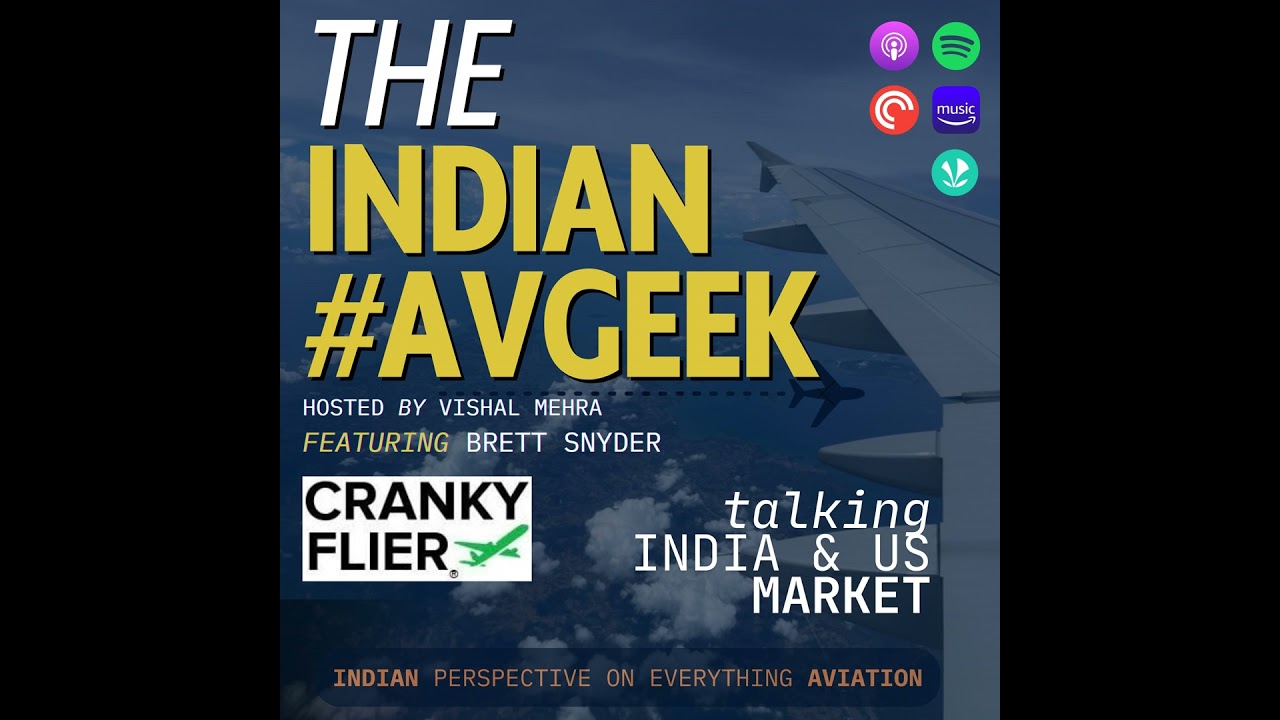
What India’s smaller airlines can learn from the US episode artwork
THE INDIAN AVGEEK039 / VIDEO PODCAST
PLAY THE AUDIO HEREEpisode 39 · Full conversationAudio plays directly on The Indian Geek.
43
RELATED CONVERSATION / FROM THE ARCHIVE
Brian Sumers — Inside the Business of the SkyFellow host of The Air Show, alongside Jon Ostrower · Airline industry economics and international strategy
READ EPISODE 43 ↗
THE CENTRAL QUESTION / WHAT YOU NEED TO KNOW
01 / THE QUESTION

What can small airlines learn about competition when aircraft and capital are scarce?

02 / THE CONVERSATION IN BRIEF

Brett Snyder examines trade-policy uncertainty, the difficulty of serving India from the US and the risks of assuming a promising market can support any airline model.

03 / THE EDITORIAL LENS

A tariff that changes unpredictably can undermine long-term fleet planning. Network feasibility depends on airspace, equipment and actual returns.

01 / THE DEEP READ

Editorial analysis

Tariffs introduce planning risk


Brett Snyder’s account of aviation trade policy begins with a distinction that is too often overlooked: even an unwelcome tariff can be modelled, but a tariff that changes unpredictably destroys the planning assumptions beneath an aircraft acquisition. Airline and airframer decisions are measured in years; trade announcements can move in days. Snyder argues that uncertainty can suppress travel demand, distort delivery routing and leave airlines negotiating who absorbs the extra import bill. The immediate effect may be manageable because airlines are already accustomed to aircraft delays. The longer-term effect could be strategic: Boeing cannot afford permanently to cede a major Chinese market to Airbus or COMAC.


India’s opportunity is not automatic


The Indian section is similarly wary of headline opportunity. US carriers face Russian airspace restrictions, range economics and network design constraints on India routes; a flight exists only where it earns an appropriate return on scarce long-haul aircraft. Air India has made progress, Snyder says, but transformation is far harder than relabelling a brand: fleet and product complexity, the Air India Express/Vistara integration and organisational change need time. India has substantial unmet demand, yet regional airlines must not simply copy the United States. His advice to smaller carriers is to find underserved networks or product propositions instead of attacking IndiGo and Air India on identical routes with an inferior cost position.


Capacity shortages and airline competition


Snyder also offers a practical hierarchy for aircraft-makers. Boeing needs to fix its existing enterprise rather than become distracted by acquiring Embraer. COMAC may improve incrementally and become consequential over time, though that is forecast, not established international product acceptance. Airbus’s supply advantage is constrained by its own delivery capacity. The commercial decision throughout is allocating scarce capital and equipment to the best use, not the most exciting press release.

EDITORIAL THESIS

An attractive travel market is not the same thing as a profitable route.

EXPLAINING THE ARGUMENTEDITORIAL / 01

Four constraints on an airline growth idea

An editorial visualisation of the relationships and choices discussed in this episode.

01Market demandDoes the airline have paying passengers at workable fares?
02Aircraft suitabilityRange, payload, ownership and delivery availability
03External exposureTrade rules, airspace access and regulatory change
04Capital disciplineCompare the route with better uses of scarce aircraft
Editorial framework from Episode 39. Forecast opinions about Boeing, COMAC and other manufacturers are not represented as established results.

02 / EXPLORE THE ARGUMENT

Questions & answers

What do changing tariffs mean for airlines?


Policy uncertainty makes fleet procurement and consumer travel planning harder.


Could China-bound Boeing aircraft find new customers?


Some may, but reopening future Chinese demand is more important than a few reassigned jets.


Would Airbus automatically win?


It might benefit but has its own constrained production capacity.


Should Boeing try again with Embraer?


Not before addressing major internal manufacturing problems.


What should India’s smaller airlines learn from the US?


Build distinctive, underserved networks rather than confronting larger carriers everywhere.

03 / TRANSPARENCY

Sources & attribution

Supporting references and reporting notes. Select a reference to visit its source.

Original conversation: The Indian AvGeek — Episode 39. Originally published 11 May 2025.


Historical context: This analysis reflects statements and assessments made during the original 2025 conversation. Strategies, forecasts, regulations, commercial claims and figures should be read in that period rather than as an independently verified account of October 2026.


Editorial Q&A: These are sourced explanatory paraphrases, not verbatim quotations from the guest.


Interpretation note: Forward-looking statements and market comparisons are attributed to the speakers’ contemporary arguments rather than asserted as established outcomes.

THE INDIAN AVGEEK / EDITORIAL EDITION 039EXPLORE MORE BRIEFINGS ↗
THE INDIAN GEEKAVIATION CONNECTS THE WORLD. ADVERTISING SHAPES HOW WE SEE IT.

AVGEEK

What India’s smaller airlines can learn from the US

Brett Snyder examines how smaller carriers compete with larger rivals, alongside tariffs, aircraft development and the choices facing US airlines in India’s market.

The conversation

Brett Snyder, the founder of Cranky Flier and the host of The Air Show podcast, joins to discuss a wide variety of issues. From the impact of tariffs on aviation to Boeing and Airbus, Embraer’s NGNB, the importance of the Indian market for US airlines, Norse Atlantic planes with IndiGo, XLRs, Air India, regional aviation, Alaska Airlines’ plans for India, next-generation aircraft, and lessons that smaller Indian airlines can draw from the US market on how to compete with the Goliaths.

Brett Snyder - @crankyflier Vishal Mehra - @vishal1mehra

Key Takeaways

  1. Snyder argues that unpredictable tariffs hurt aviation by undermining long-cycle fleet decisions and travel confidence, beyond the direct cost of a levy.
  2. Aircraft deliveries redirected away from China might solve immediate shortages elsewhere, but losing China as a long-term Boeing market would be strategically damaging.
  3. Airbus could benefit competitively, although its own delivery backlog limits how quickly it can replace Boeing capacity.
  4. Snyder questions whether Boeing should revisit an Embraer combination before stabilising manufacturing and the rest of its business.
  5. US–India long-haul economics depend on aircraft range, route-specific demand and restricted airspace, not simply enthusiasm for a growing Indian market.
  6. He sees progress at Air India but cautions that combining fleets, brands and products is a prolonged operational turnaround rather than an instant success.
  7. Smaller Indian airlines should seek underserved city pairs or distinctive niches, and should test regional aircraft against India's actual ground-transport and demand conditions.

Additional subjects

Editorial analysis

Tariffs introduce planning risk


Brett Snyder’s account of aviation trade policy begins with a distinction that is too often overlooked: even an unwelcome tariff can be modelled, but a tariff that changes unpredictably destroys the planning assumptions beneath an aircraft acquisition. Airline and airframer decisions are measured in years; trade announcements can move in days. Snyder argues that uncertainty can suppress travel demand, distort delivery routing and leave airlines negotiating who absorbs the extra import bill. The immediate effect may be manageable because airlines are already accustomed to aircraft delays. The longer-term effect could be strategic: Boeing cannot afford permanently to cede a major Chinese market to Airbus or COMAC.


India’s opportunity is not automatic


The Indian section is similarly wary of headline opportunity. US carriers face Russian airspace restrictions, range economics and network design constraints on India routes; a flight exists only where it earns an appropriate return on scarce long-haul aircraft. Air India has made progress, Snyder says, but transformation is far harder than relabelling a brand: fleet and product complexity, the Air India Express/Vistara integration and organisational change need time. India has substantial unmet demand, yet regional airlines must not simply copy the United States. His advice to smaller carriers is to find underserved networks or product propositions instead of attacking IndiGo and Air India on identical routes with an inferior cost position.


Capacity shortages and airline competition


Snyder also offers a practical hierarchy for aircraft-makers. Boeing needs to fix its existing enterprise rather than become distracted by acquiring Embraer. COMAC may improve incrementally and become consequential over time, though that is forecast, not established international product acceptance. Airbus’s supply advantage is constrained by its own delivery capacity. The commercial decision throughout is allocating scarce capital and equipment to the best use, not the most exciting press release.

Questions & answers

What do changing tariffs mean for airlines?


Policy uncertainty makes fleet procurement and consumer travel planning harder.


Could China-bound Boeing aircraft find new customers?


Some may, but reopening future Chinese demand is more important than a few reassigned jets.


Would Airbus automatically win?


It might benefit but has its own constrained production capacity.


Should Boeing try again with Embraer?


Not before addressing major internal manufacturing problems.


What should India’s smaller airlines learn from the US?


Build distinctive, underserved networks rather than confronting larger carriers everywhere.

Sources & attribution

Original conversation: The Indian AvGeek — Episode 39. Originally published 11 May 2025.


Historical context: This analysis reflects statements and assessments made during the original 2025 conversation. Strategies, forecasts, regulations, commercial claims and figures should be read in that period rather than as an independently verified account of October 2026.


Editorial Q&A: These are sourced explanatory paraphrases, not verbatim quotations from the guest.


Interpretation note: Forward-looking statements and market comparisons are attributed to the speakers’ contemporary arguments rather than asserted as established outcomes.

THE INDIAN GEEK

Aviation connects the world.
Advertising shapes how we see it.