01 / THE DEEP READ
Editorial analysis
An airline brand is an operating discipline
Airline marketing does not end when a campaign reaches the passenger. Solomon Wheeler argues that the promise must survive the website, airport, cabin and response to a complaint. Looking back on his work at SpiceJet and Vistara, he describes marketing as coordination across the customer journey: technology, frontline teams, network planning and revenue management all help determine whether a brand behaves as it says it will.
From launch novelty to a durable identity
His account of Vistara begins with a problem familiar to a young premium brand: novelty cannot remain the proposition indefinitely. Wheeler recalls asking what should follow the airline’s early launch positioning. The answer was a more explicit cultural ambition, centred on humane treatment, sincerity and avoiding unpleasant surprises for customers. He presents communication to staff as a necessary link between that ambition and service. A polished advertisement could not make up for employees interpreting the brand differently at each touchpoint.
What the Retrojet actually represented
The Retrojet illustrates how publicity and product could support the same idea. Wheeler credits a collaborative effort involving commercial leadership, technical expertise, marketing, product teams and Airbus. He describes the aircraft’s appearance, uniforms, meals and service as parts of a deliberate connection with aviation heritage. Attention was useful because it served a positioning argument, not simply because a distinctive aircraft generated photographs. His reflections after Vistara’s final flight remain a former executive’s assessment of why passengers felt attached to the brand, rather than a measured campaign-effectiveness result.
The revenue-management logic of marketing
There is a harder commercial discipline beneath the service story. Wheeler says promotional fares were planned with revenue management around seats unlikely to sell, seasonal demand and opportunities to introduce new passengers to the product. Route launches similarly required advance coordination, sales support and local activity, not merely opening inventory. His advice to newer airlines is to empower the people delivering the service and use practical judgement in product design. The through-line is that brand-building must connect behaviour with the economics of filling an aircraft at the right price.
An airline brand is what the staff and the operation deliver after the advertising ends.
Where the airline brand promise is delivered
An editorial visualisation of the relationships and choices discussed in this episode.
02 / EXPLORE THE ARGUMENT
Questions & answers
Where is an airline’s brand actually delivered?
Wheeler argues that it is delivered across the booking journey, airport, crew, cabin and complaint handling. Marketing cannot make those functions consistent on its own.
What was Vistara’s challenge after its launch?
The airline needed a durable identity beyond launch novelty. Wheeler describes aligning internal teams around sincerity, considerate service and fewer unpleasant surprises.
Was the Retrojet primarily a publicity exercise?
Wheeler presents it as a coordinated heritage proposition including aircraft appearance, uniforms, food and service. Publicity mattered only insofar as it supported that experience.
Why must fare promotions be planned with revenue management?
The purpose is to stimulate demand where seats would otherwise go unsold, taking account of seasonal patterns and realistic willingness to pay.
What does a successful new-route launch require?
In Wheeler’s account, local sales effort, airport activity, publicity and stakeholder coordination are needed in addition to putting tickets on sale.
03 / TRANSPARENCY
Sources & attribution
Supporting references and reporting notes. Select a reference to visit its source.
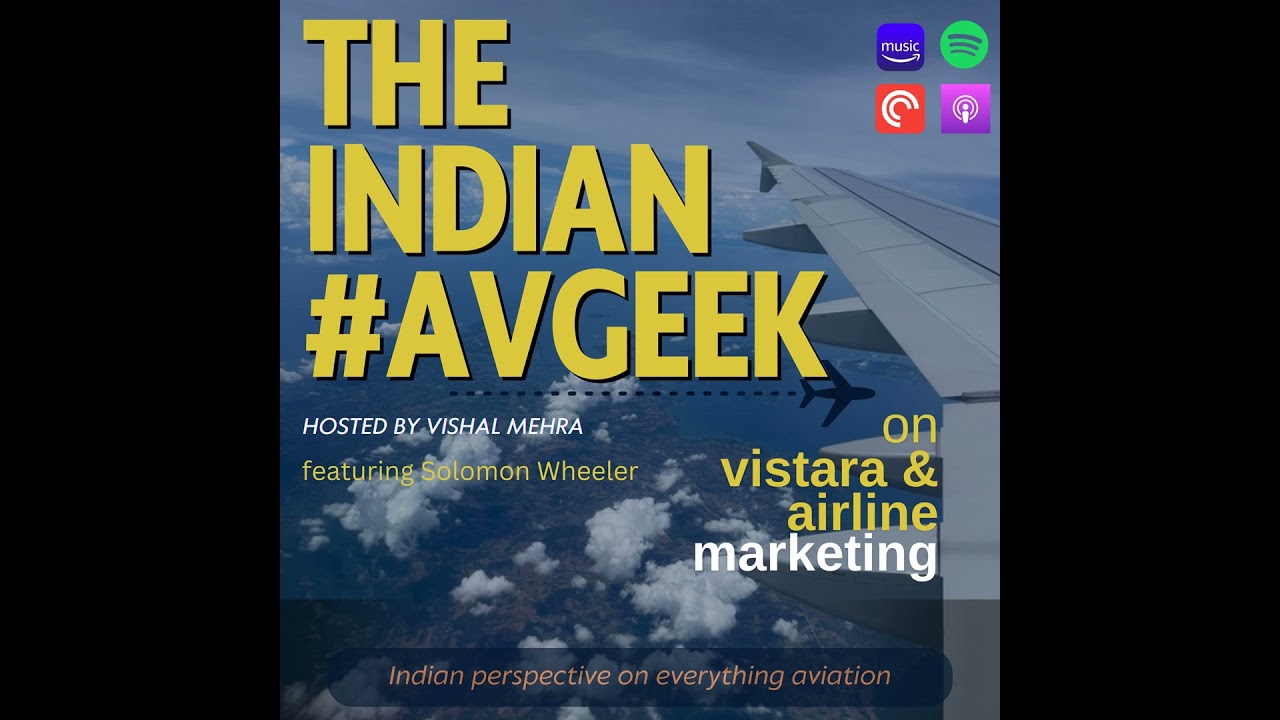
Original conversation: The Indian AvGeek — Episode 16. Published 17 November 2024.
Historical context: This is an editorial analysis of a conversation recorded and released in November 2024. Guest assessments, future plans, regulatory proposals and commercial claims reflect that historical discussion and are not presented as current, independently verified developments.
Editorial method: Questions and answers are carefully edited explanatory paraphrases—not verbatim interview quotations. Commentary, figures and claims requiring updated verification should be checked against the recording and contemporaneous official sources before final public release.