Skip to content
THE INDIAN GEEKAVIATION CONNECTS THE WORLD / ADVERTISING SHAPES HOW WE SEE ITEXPLORE THE INDIAN AVGEEK ↗
THE INDIAN AVGEEK EPISODE 028EDITORIAL KNOWLEDGE EDITION
AVIATION / THE BUSINESS OF FLIGHT

The business behind airline status

Mark Ross-Smith explains loyalty through recognition, customer data and revenue.

WITH MARK ROSS-SMITH 23 FEB 2025 37 MIN

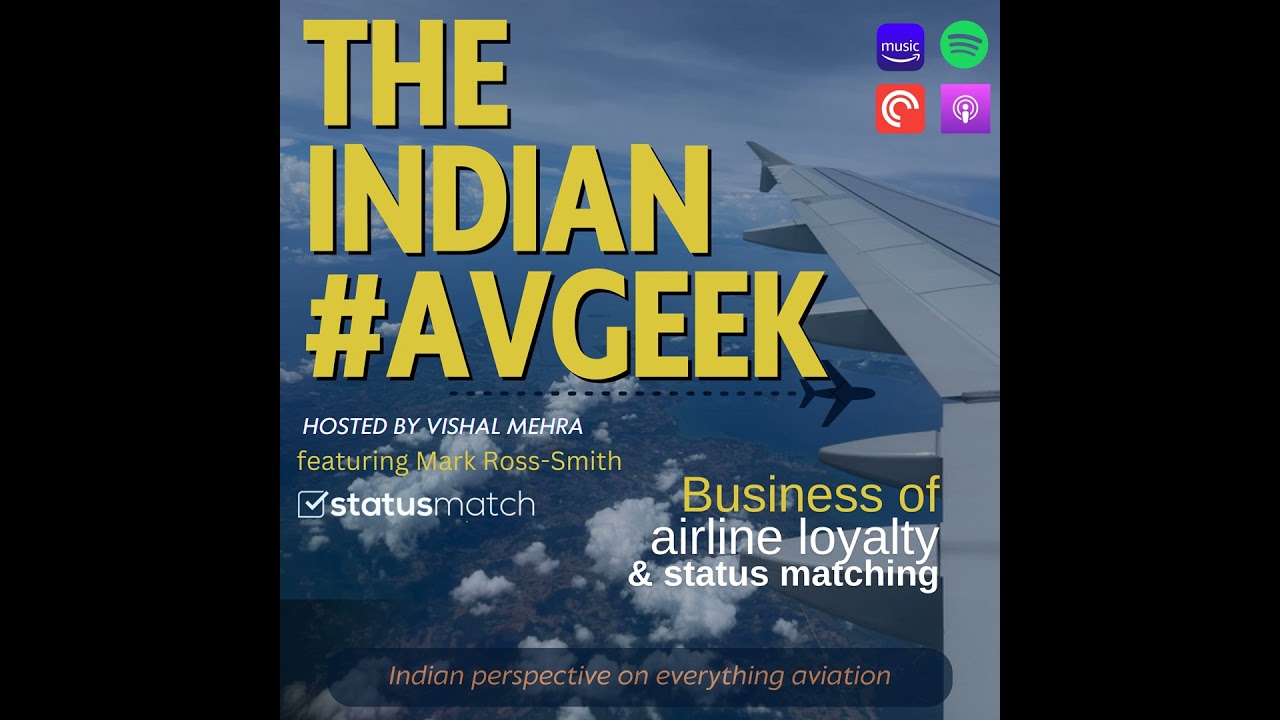
The business behind airline status episode artwork
THE INDIAN AVGEEK028 / VIDEO PODCAST
PLAY THE AUDIO HEREEpisode 28 · Full conversationAudio plays directly on The Indian Geek.
29
RELATED CONVERSATION / FROM THE ARCHIVE
The Business of Airline Loyalty — Part 2Mark Ross-Smith · Redemption economics, loyalty marketing and lifetime passenger value
READ EPISODE 29 ↗
THE CENTRAL QUESTION / WHAT YOU NEED TO KNOW
01 / THE QUESTION

When does status matching create value for an airline and a frequent flyer?

02 / THE CONVERSATION IN BRIEF

Mark Ross-Smith argues that status recognition is a customer-acquisition proposition supported by airline data, scarce benefits and appropriate targeting.

03 / THE EDITORIAL LENS

Status is useful only when benefits can be delivered without diluting the programme. Predictions about loyalty companies buying airlines are not established transactions.

01 / THE DEEP READ

Editorial analysis

Elite status as a customer-acquisition strategy


Airline elite status is usually marketed as a reward for loyalty. Mark Ross-Smith argues it is also a highly targeted customer-acquisition and revenue product, provided the airline treats the underlying traveller relationship as more valuable than the badge alone. StatusMatch operates as an intermediary between passengers seeking transferable recognition and airlines willing to recruit high-frequency, comparatively high-spending flyers. The economics are attractive because these passengers are likelier to buy close to departure and value benefits that make future travel predictable. These are Ross-Smith’s commercial propositions, not independent measurements of programme profitability.


Why status must remain scarce


Ross-Smith’s story makes clear why status cannot simply be given away. He entered loyalty through an entrepreneurial and frequent-flyer background, then ran Malaysia Airlines’ Enrich programme. He describes StatusMatch and adjacent paid products as ways to identify and acquire travellers whose existing tier is a signal of activity. The airline, not the traveller, is principally his firm’s commercial customer; integration requires airline contracts, technology links and campaign design. His “top five per cent” and value claims are indicative claims from an interested vendor and require independent data before being republished as industry constants.


The financial business behind loyalty


The conversation becomes a useful examination of loyalty as a financial business. The host raises the Etihad investment in Jet Airways and the valuation of JetPrivilege, while Ross-Smith recalls the possibility that a loyalty company could acquire or launch an airline to support its own economics. He explicitly says that his earlier prediction did not happen. That speculative anecdote should not be recast as an actual deal. The distinction matters: loyalty programmes can have separate revenue, partner and finance attributes, but programme valuation depends on redemption liabilities, customer behaviour, counterparties and audited cash flows.


The tension between yield and belonging


The most interesting tension is between spreadsheet-optimised revenue qualification and emotional identity. Ross-Smith observes a movement towards revenue-based tier qualification, citing British Airways and Iberia, but argues that an elite traveller experiences a status badge as personal recognition, not simply a calculation of money spent. He does not reject commercial discipline; he warns that making the thresholds too visibly transactional may weaken the very emotional asset the airline wants to monetise.


Beyond bags and seat selection


Finally, he urges airlines to retail to loyal customers more thoughtfully. Standard bags, seat selection and lounge bundles can be redundant when those privileges are already included with elite tier. Status restoration, acceleration, subscriptions and carefully priced products can generate incremental revenue, but broad status grants have real lounge, alliance and customer-experience costs. His Frontier Airlines example illustrates a customer-acquisition mechanism for an ultra-low-cost airline, though the claimed commercial success is not independently quantified in the episode. The discussion also covers India-specific uptake in a Star Alliance/SAS status migration campaign without verifying exact market-wide demand.

EDITORIAL THESIS

Elite status is a customer relationship a carrier must earn the right to maintain.

EXPLAINING THE ARGUMENTEDITORIAL / 01

The economics of status matching

An editorial visualisation of the relationships and choices discussed in this episode.

01Identify the travellerExisting tier signals relevant flying behaviour
02Offer recognitionA partner airline invites eligible customers to switch or trial
03Deliver useful benefitsAvailability, service and recognition determine satisfaction
04Earn lasting loyaltyFuture spend and engagement must cover acquisition cost
Conceptual model drawn from Episode 28. It does not assert specific customer lifetime values or programme profitability.

02 / EXPLORE THE ARGUMENT

Questions & answers

How did Ross-Smith enter aviation loyalty?


From running a prior business and being an intensive flyer to leading Malaysia Airlines Enrich and building status-focused products.


How does banking relate to airline loyalty?


Co-branded payment products increasingly drive commercial value; airline programmes are more than mileage rewards.


What happened to the loyalty-programme-buying-an-airline idea?


He predicted it but confirms it did not occur.


Is spend-based elite status a good trend?


Economically simple, but may strip the emotion and game-like engagement from the tier relationship.


Why not make everyone elite?


Lounge capacity, alliance reciprocity and exclusivity impose commercial and service constraints.

03 / TRANSPARENCY

Sources & attribution

Supporting references and reporting notes. Select a reference to visit its source.

Original recording: The Indian AvGeek — Episode 28. Original episode published 23 February 2025.


Editorial context: This analysis examines the conversation in its original 2025 setting. Forecasts, strategy proposals, statistics and other assessments are attributed to that historical discussion, not presented as independently verified facts about October 2026.


Q&A note: These are edited, source-grounded explanations rather than verbatim quotations. Publication requires editorial review of sensitive claims and any uncertain transcript names or figures.

THE INDIAN AVGEEK / EDITORIAL EDITION 028EXPLORE MORE BRIEFINGS ↗
THE INDIAN GEEKAVIATION CONNECTS THE WORLD. ADVERTISING SHAPES HOW WE SEE IT.

AVGEEK

The business behind airline status

Mark Ross-Smith explains loyalty through recognition, customer data and revenue.

The conversation

This episode features Mark Ross-Smith, the CEO of Loyalty Status Co - StatusMatch. We discussed the nitty-gritty of the airline loyalty and status matching industry.

* How did he get to lead Malaysia Airlines’ Enrich FFP? * The story behind starting Status Match * The status of Indian airline loyalty market * How has loyalty and status matching evolved into a multi-billion dollar ancillary revenue industry for airlines? * Global insights and trends in the industry that Indian carriers can adopt * Size of Indian business, which airline is seeing maximum traction? * How come StatusMatch hasn’t onboarded Air India Maharaja Club yet? * Most successful airline partner? * How can airlines increase their ancillary revenue? * If a large number of flyers get status easily, what would that mean for the airline and industry?

Mark - @drdoot

Vishal Mehra - @vishal1mehra

Key Takeaways

  1. Status matching is a commercial acquisition tool, not simply a free elite perk. Mark Ross-Smith linked access to recognition with attracting already-active, comparatively valuable travellers and with airlines’ wider ancillary-revenue opportunities.
  2. Ross-Smith’s Malaysia Airlines Enrich experience and the creation of StatusMatch illuminate both sides of the business. The consumer-facing offer relies on airline partnerships, data and technical integration; it is not just a traveller application detached from airline economics.
  3. Indian airline loyalty is not a single uniform opportunity. The episode examined partner possibilities and carrier differences, including the question of Air India Maharaja Club’s absence from StatusMatch; the question alone establishes neither a commercial obstacle nor a later partnership.
  4. Loyalty-programme valuation requires care with the underlying claim. The discussion includes JetPrivilege, while Ross-Smith explicitly acknowledged that his prediction of a loyalty programme acquiring an airline had not materialised; it should not be retold as an event.
  5. Spend-based qualification can conflict with the emotional recognition that makes an elite tier valuable. Broadly extending status also carries lounge, alliance-partner and service costs, so recruitment must be balanced against benefit delivery and exclusivity.
  6. Subscriptions and tailored post-flight offers can bring forward revenue or encourage another purchase, but those outcomes do not establish profitability. The commercial test includes the cost of delivering the offer, not just the initial payment.
  7. Elite customers may already have bags, seats and lounge access. Status restoration or acceleration may therefore be more relevant than a standard ancillary upsell; product design has to start with benefits the customer already holds.

Editorial analysis

Elite status as a customer-acquisition strategy


Airline elite status is usually marketed as a reward for loyalty. Mark Ross-Smith argues it is also a highly targeted customer-acquisition and revenue product, provided the airline treats the underlying traveller relationship as more valuable than the badge alone. StatusMatch operates as an intermediary between passengers seeking transferable recognition and airlines willing to recruit high-frequency, comparatively high-spending flyers. The economics are attractive because these passengers are likelier to buy close to departure and value benefits that make future travel predictable. These are Ross-Smith’s commercial propositions, not independent measurements of programme profitability.


Why status must remain scarce


Ross-Smith’s story makes clear why status cannot simply be given away. He entered loyalty through an entrepreneurial and frequent-flyer background, then ran Malaysia Airlines’ Enrich programme. He describes StatusMatch and adjacent paid products as ways to identify and acquire travellers whose existing tier is a signal of activity. The airline, not the traveller, is principally his firm’s commercial customer; integration requires airline contracts, technology links and campaign design. His “top five per cent” and value claims are indicative claims from an interested vendor and require independent data before being republished as industry constants.


The financial business behind loyalty


The conversation becomes a useful examination of loyalty as a financial business. The host raises the Etihad investment in Jet Airways and the valuation of JetPrivilege, while Ross-Smith recalls the possibility that a loyalty company could acquire or launch an airline to support its own economics. He explicitly says that his earlier prediction did not happen. That speculative anecdote should not be recast as an actual deal. The distinction matters: loyalty programmes can have separate revenue, partner and finance attributes, but programme valuation depends on redemption liabilities, customer behaviour, counterparties and audited cash flows.


The tension between yield and belonging


The most interesting tension is between spreadsheet-optimised revenue qualification and emotional identity. Ross-Smith observes a movement towards revenue-based tier qualification, citing British Airways and Iberia, but argues that an elite traveller experiences a status badge as personal recognition, not simply a calculation of money spent. He does not reject commercial discipline; he warns that making the thresholds too visibly transactional may weaken the very emotional asset the airline wants to monetise.


Beyond bags and seat selection


Finally, he urges airlines to retail to loyal customers more thoughtfully. Standard bags, seat selection and lounge bundles can be redundant when those privileges are already included with elite tier. Status restoration, acceleration, subscriptions and carefully priced products can generate incremental revenue, but broad status grants have real lounge, alliance and customer-experience costs. His Frontier Airlines example illustrates a customer-acquisition mechanism for an ultra-low-cost airline, though the claimed commercial success is not independently quantified in the episode. The discussion also covers India-specific uptake in a Star Alliance/SAS status migration campaign without verifying exact market-wide demand.

Questions & answers

How did Ross-Smith enter aviation loyalty?


From running a prior business and being an intensive flyer to leading Malaysia Airlines Enrich and building status-focused products.


How does banking relate to airline loyalty?


Co-branded payment products increasingly drive commercial value; airline programmes are more than mileage rewards.


What happened to the loyalty-programme-buying-an-airline idea?


He predicted it but confirms it did not occur.


Is spend-based elite status a good trend?


Economically simple, but may strip the emotion and game-like engagement from the tier relationship.


Why not make everyone elite?


Lounge capacity, alliance reciprocity and exclusivity impose commercial and service constraints.

Sources & attribution

Original recording: The Indian AvGeek — Episode 28. Original episode published 23 February 2025.


Editorial context: This analysis examines the conversation in its original 2025 setting. Forecasts, strategy proposals, statistics and other assessments are attributed to that historical discussion, not presented as independently verified facts about October 2026.


Q&A note: These are edited, source-grounded explanations rather than verbatim quotations. Publication requires editorial review of sensitive claims and any uncertain transcript names or figures.

THE INDIAN GEEK

Aviation connects the world.
Advertising shapes how we see it.