Skip to content
THE INDIAN GEEKAVIATION CONNECTS THE WORLD / ADVERTISING SHAPES HOW WE SEE ITEXPLORE THE INDIAN AVGEEK ↗
THE INDIAN AVGEEK EPISODE 029EDITORIAL KNOWLEDGE EDITION
AVIATION / THE BUSINESS OF FLIGHT

Status matching, passenger value and loyalty’s revenue tensions

In part two, Mark Ross-Smith examines loyalty marketing, customer data and lifetime passenger value, including the tension with revenue management and the differences between airline and hotel programmes.

WITH MARK ROSS-SMITH 02 MAR 2025 37 MIN

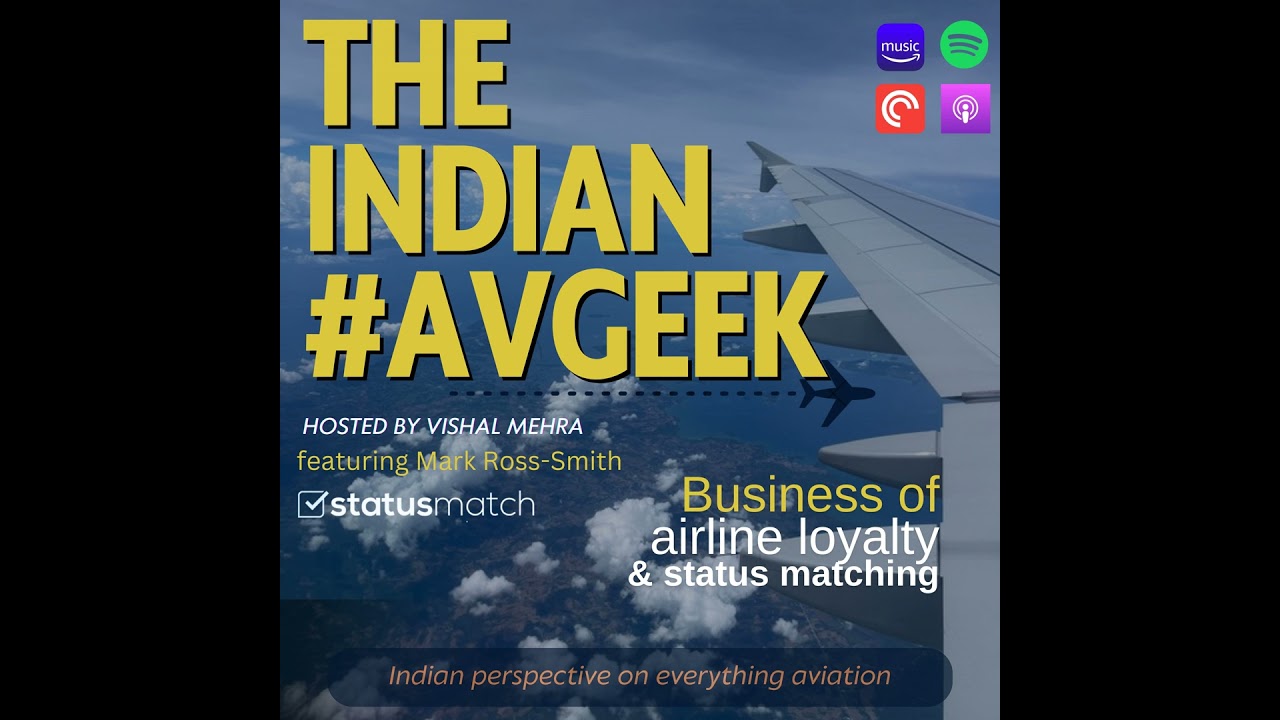
Status matching, passenger value and loyalty’s revenue tensions episode artwork
THE INDIAN AVGEEK029 / VIDEO PODCAST
PLAY THE AUDIO HEREEpisode 29 · Full conversationAudio plays directly on The Indian Geek.
28
RELATED CONVERSATION / FROM THE ARCHIVE
The Business of Airline Loyalty — Part 1Mark Ross-Smith · Status matching, elite recognition and the financial business behind airline loyalty
READ EPISODE 28 ↗
THE CENTRAL QUESTION / WHAT YOU NEED TO KNOW
01 / THE QUESTION

Why do loyalty managers and revenue managers disagree about the same award seat?

02 / THE CONVERSATION IN BRIEF

Mark Ross-Smith describes how a near-term seat revenue calculation competes with longer-term customer value and status acquisition goals.

03 / THE EDITORIAL LENS

Illustrative internal transfer prices are not industry benchmarks; reward costs, partner payments and lifetime value vary by airline.

01 / THE DEEP READ

Editorial analysis

Loyalty marketing has a distribution problem


Airline loyalty has developed a sophisticated balance sheet but often communicates like an airline selling another seat. Ross-Smith argues that this is particularly self-defeating for status-match offers: an airline knows its existing customers and can reach them cheaply, but it must persuade qualified travellers loyal to somebody else. Its own app, loyalty database and press releases are structurally weak channels for that task. Specialist travel publications, affiliate networks and traveller communities can reach the excluded audience, often with the credibility that carefully approved corporate announcements lack.


That distribution problem contains an editorial paradox: a reviewer who can criticise an airline in the traveller’s own language may be a more effective acquisition channel than a flawless corporate campaign. Ross-Smith values the credibility of unscripted responses, including criticism. His service-recovery story involving a family complaint is an anecdote, not measurable evidence of the economics of influencer marketing.


Redemption economics and internal incentives


The more substantive debate is internal. Airline revenue managers measure the cash that an occupied seat could earn on a particular flight; loyalty managers try to preserve the future revenue of the customer asking to redeem an award. A premium seat can therefore appear expensive to both teams for different reasons. Ross-Smith’s illustrative $5,000 sale versus $1,000 internal redemption is a hypothetical, not an industry benchmark. He argues that lifetime value is hard to prove at the same precision as today’s fare and that commercial governance tends to favour the immediate yield.


The next frontier for loyalty design


The interview extends the argument to first-party insights, hospitality partnerships, elite-tier inflation and lifetime benefits. It is deliberately bullish on India because local airlines are building more differentiated premium propositions and foreign carriers want access to an expanding customer base. But the conversation is not evidence that status monetisation or premium demand will grow everywhere: its forecasts and program comparisons are the guest’s commercial interpretation at recording.


The same mismatch appears when a hotel and an airline describe a member as ‘Gold’. Their tiers can carry very different costs and service entitlements; automatic reciprocity can give away benefits that the programme cannot support. Lifetime recognition offers a different approach, rewarding a small group over time without necessarily removing the incentive to keep flying. Those are programme-design choices rather than a universal formula.

EDITORIAL THESIS

The value of a reward seat depends on whether the airline is pricing a flight or a relationship.

EXPLAINING THE ARGUMENTEDITORIAL / 01

Two ways to evaluate the same award seat

An editorial visualisation of the relationships and choices discussed in this episode.

01Revenue managementWhat cash could this seat earn on this flight?
02Loyalty programmeWhat future value could this member contribute?
03Award availabilityInventory and internal compensation translate competing priorities
04Customer outcomeA useful redemption can reinforce loyalty—or disappoint
Editorial interpretation of Episode 29. Hypothetical figures in the interview are examples, not universal redemption economics.

02 / EXPLORE THE ARGUMENT

Questions & answers

How do passengers discover StatusMatch offers?


Airline-owned channels are weak at targeting noncustomers, so a travel-blogger and affiliate ecosystem helps.


What could Indian loyalty programmes do differently?


Use growing premium demand, distinct market positions, and first-party insights to develop partnerships.


What makes loyalty programmes hard to run profitably?


Redemption needs can conflict with revenue-management targets and short-term cash metrics.


Do lifetime tiers destroy economics?


Not necessarily; they are scarce, reward past expenditure and can motivate continued engagement.


What will change next?


Evolution of subscriptions, redemption mechanics and paid/status benefits could accelerate, without a wholesale overnight reinvention.

03 / TRANSPARENCY

Sources & attribution

Supporting references and reporting notes. Select a reference to visit its source.

Original recording: The Indian AvGeek — Episode 29. Original episode published 02 March 2025.


Editorial context: This analysis examines the conversation in its original 2025 setting. Forecasts, strategy proposals, statistics and other assessments are attributed to that historical discussion, not presented as independently verified facts about October 2026.


Q&A note: These are edited, source-grounded explanations rather than verbatim quotations. Publication requires editorial review of sensitive claims and any uncertain transcript names or figures.

THE INDIAN AVGEEK / EDITORIAL EDITION 029EXPLORE MORE BRIEFINGS ↗
THE INDIAN GEEKAVIATION CONNECTS THE WORLD. ADVERTISING SHAPES HOW WE SEE IT.

AVGEEK

Status matching, passenger value and loyalty’s revenue tensions

In part two, Mark Ross-Smith examines loyalty marketing, customer data and lifetime passenger value, including the tension with revenue management and the differences between airline and hotel programmes.

The conversation

This is the second part of our conversation with Mark Ross-Smith, the CEO of Loyalty Status Co - StatusMatch. In this episode, we go deeper into the business of airline loyalty and status matching.

* How does StatusMatch do its marketing? * The importance of points/miles websites * The power of authenticity in loyalty marketing * Story behind the viral “Chocolate Airlines,” which went viral * How an airline used numerology to understand pax * Priorities for StatusMatch in the Indian market * How can Indian FFPs differentiate themselves & monetize data? * The evergreen struggle between loyalty and revenue management in airlines * Understanding the lifetime value of passengers * How is hotel loyalty different from an airline? * What can hotels do to make their loyalty programs more attractive? * Is awarding lifetime status a loss-making exercise for airlines? * Future trends/innovations in airline loyalty programs

Mark - @drdoot Vishal Mehra - @vishal1mehra

Key Takeaways

  1. Ross-Smith says status-match campaigns need specialist and affiliate channels because airlines' own marketing usually reaches existing members, not the rival carriers' flyers they want to win.
  2. He sees independent travel writers and communities as credible distributors of loyalty offers, including when their verdicts are critical rather than promotional.
  3. His Etihad chocolate story illustrates an anecdotal service-recovery opportunity; it is not evidence of a measured, repeatable airline return on investment.
  4. He distinguishes using aggregated customer insights with partners from selling passengers' identifiable records, and describes an unusual, unverified numerology-based targeting experiment.
  5. Loyalty and revenue management compete for the same inventory: immediate seat yield can clash with the harder-to-model lifetime value of rewarding a frequent flyer.
  6. Hotel and airline status have different costs and benefits, limiting one-to-one reciprocal matching even where airline-hotel points partnerships make sense.
  7. Ross-Smith expects faster evolution of elite status, subscriptions and loyalty partnerships, but offers a commercial forecast rather than a dated launch commitment.

Editorial analysis

Loyalty marketing has a distribution problem


Airline loyalty has developed a sophisticated balance sheet but often communicates like an airline selling another seat. Ross-Smith argues that this is particularly self-defeating for status-match offers: an airline knows its existing customers and can reach them cheaply, but it must persuade qualified travellers loyal to somebody else. Its own app, loyalty database and press releases are structurally weak channels for that task. Specialist travel publications, affiliate networks and traveller communities can reach the excluded audience, often with the credibility that carefully approved corporate announcements lack.


That distribution problem contains an editorial paradox: a reviewer who can criticise an airline in the traveller’s own language may be a more effective acquisition channel than a flawless corporate campaign. Ross-Smith values the credibility of unscripted responses, including criticism. His service-recovery story involving a family complaint is an anecdote, not measurable evidence of the economics of influencer marketing.


Redemption economics and internal incentives


The more substantive debate is internal. Airline revenue managers measure the cash that an occupied seat could earn on a particular flight; loyalty managers try to preserve the future revenue of the customer asking to redeem an award. A premium seat can therefore appear expensive to both teams for different reasons. Ross-Smith’s illustrative $5,000 sale versus $1,000 internal redemption is a hypothetical, not an industry benchmark. He argues that lifetime value is hard to prove at the same precision as today’s fare and that commercial governance tends to favour the immediate yield.


The next frontier for loyalty design


The interview extends the argument to first-party insights, hospitality partnerships, elite-tier inflation and lifetime benefits. It is deliberately bullish on India because local airlines are building more differentiated premium propositions and foreign carriers want access to an expanding customer base. But the conversation is not evidence that status monetisation or premium demand will grow everywhere: its forecasts and program comparisons are the guest’s commercial interpretation at recording.


The same mismatch appears when a hotel and an airline describe a member as ‘Gold’. Their tiers can carry very different costs and service entitlements; automatic reciprocity can give away benefits that the programme cannot support. Lifetime recognition offers a different approach, rewarding a small group over time without necessarily removing the incentive to keep flying. Those are programme-design choices rather than a universal formula.

Questions & answers

How do passengers discover StatusMatch offers?


Airline-owned channels are weak at targeting noncustomers, so a travel-blogger and affiliate ecosystem helps.


What could Indian loyalty programmes do differently?


Use growing premium demand, distinct market positions, and first-party insights to develop partnerships.


What makes loyalty programmes hard to run profitably?


Redemption needs can conflict with revenue-management targets and short-term cash metrics.


Do lifetime tiers destroy economics?


Not necessarily; they are scarce, reward past expenditure and can motivate continued engagement.


What will change next?


Evolution of subscriptions, redemption mechanics and paid/status benefits could accelerate, without a wholesale overnight reinvention.

Sources & attribution

Original recording: The Indian AvGeek — Episode 29. Original episode published 02 March 2025.


Editorial context: This analysis examines the conversation in its original 2025 setting. Forecasts, strategy proposals, statistics and other assessments are attributed to that historical discussion, not presented as independently verified facts about October 2026.


Q&A note: These are edited, source-grounded explanations rather than verbatim quotations. Publication requires editorial review of sensitive claims and any uncertain transcript names or figures.

THE INDIAN GEEK

Aviation connects the world.
Advertising shapes how we see it.