01 / THE DEEP READ
Editorial analysis
Aircraft sales begin with problem definition
Vasuki Prasad describes aircraft marketing as a process of finding out whether the product should be offered at all. Before negotiating a purchase, the manufacturer needs to understand the airline’s problems and establish whether its aircraft can make a useful difference. Sometimes the answer is no. His account places research, education and joint analysis ahead of the visible proposal, with the eventual negotiation covering terms rather than price alone. The often lengthy sales cycle is therefore partly a period of developing a credible commercial case.
What Vistara data analysis taught the seller
That approach has roots in his earlier role at Vistara. Prasad describes commercial planning and analysis as an internal consulting function that crossed departmental boundaries. The work began with cleaning data before interpreting it. One application aimed to identify flights likely to produce weak revenue while there was still time for revenue management to respond. His route examples also resist a simple metro-versus-regional hierarchy: departure timing, market demand and the value of onward connections can change a flight’s result. He recalls strong performance during that period, describing the work as a joint effort with revenue management.
Why smaller trip costs can matter
At Embraer, the commercial story connects aircraft performance with airline economics. Prasad explains Profit Hunter as a way to make the smaller aircraft’s proposition visible: lower total trip expenditure can matter on routes where a larger aircraft is difficult to fill consistently. His comparison with larger narrowbodies is manufacturer positioning, dependent on the operating assumptions behind it. It does not establish that one aircraft wins everywhere. He similarly separates general awareness of the Embraer brand from detailed understanding of what a particular aircraft can do for an airline.
Awareness is not the same as an aircraft order
The marketing discussion distinguishes broad attention from sustained business engagement. An eye-catching livery can generate interest among airlines and the travelling public, but it sits alongside more personal work with the people considering an acquisition. Prasad’s personal scepticism about the changing value of airshows adds a useful tension: greater digital access can make research and introductions easier without eliminating the need for relationships. Across the conversation, the aircraft is treated as a tool for an airline’s particular problem, rather than a product made desirable simply by promotion.
An aircraft's value is determined by the mission it can serve profitably—not by its size alone.
How a narrowbody fleet proposal becomes credible
An editorial visualisation of the relationships and choices discussed in this episode.
02 / EXPLORE THE ARGUMENT
Questions & answers
What happens before an aircraft manufacturer submits a commercial proposal?
Prasad describes identifying the customer’s problem and testing whether the product fits. Sometimes the correct answer is not to offer that aircraft.
What did his airline-planning experience teach him about data?
At Vistara, he says cleaning inputs was a prerequisite for identifying flights at risk of weak revenue and helping revenue management respond.
Why does the departure time matter in network analysis?
Two nominally similar city pairs can have different outcomes because timing and onward connections change the value of the itinerary.
What is the commercial argument for a smaller jet?
On thinner routes, lower total trip expenditure may matter more than the cost per seat of a larger aircraft that is difficult to fill. The comparison is mission-specific manufacturer positioning.
Can a striking aircraft campaign close a sale?
Attention can open conversations, but Prasad portrays detailed analysis and personal engagement with airline teams as central to fleet decisions.
03 / TRANSPARENCY
Sources & attribution
Supporting references and reporting notes. Select a reference to visit its source.
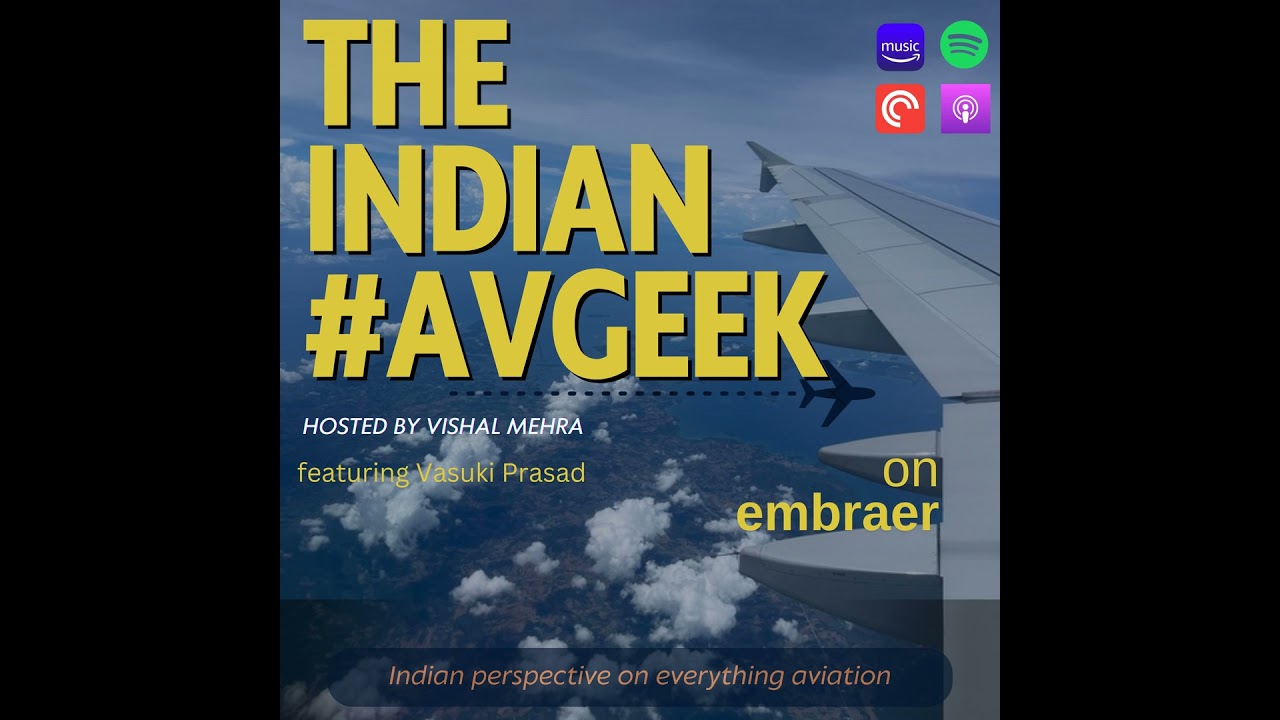
Original conversation: The Indian AvGeek — Episode 17. Published 01 December 2024.
Historical context: This is an editorial analysis of a conversation recorded and released in December 2024. Guest assessments, future plans, regulatory proposals and commercial claims reflect that historical discussion and are not presented as current, independently verified developments.
Editorial method: Questions and answers are carefully edited explanatory paraphrases—not verbatim interview quotations. Commentary, figures and claims requiring updated verification should be checked against the recording and contemporaneous official sources before final public release.